
How to Remove the Smell From Thrifted Clothes
Thrifting has gone mainstream in India: Instagram thrift stores, flea markets, preloved apps and the export-surplus stalls in every city. The prices are great. The smell is not always. How to tell what you are dealing with and clear it without ruining a one-off find.
How do you get the smell out of thrifted clothes?
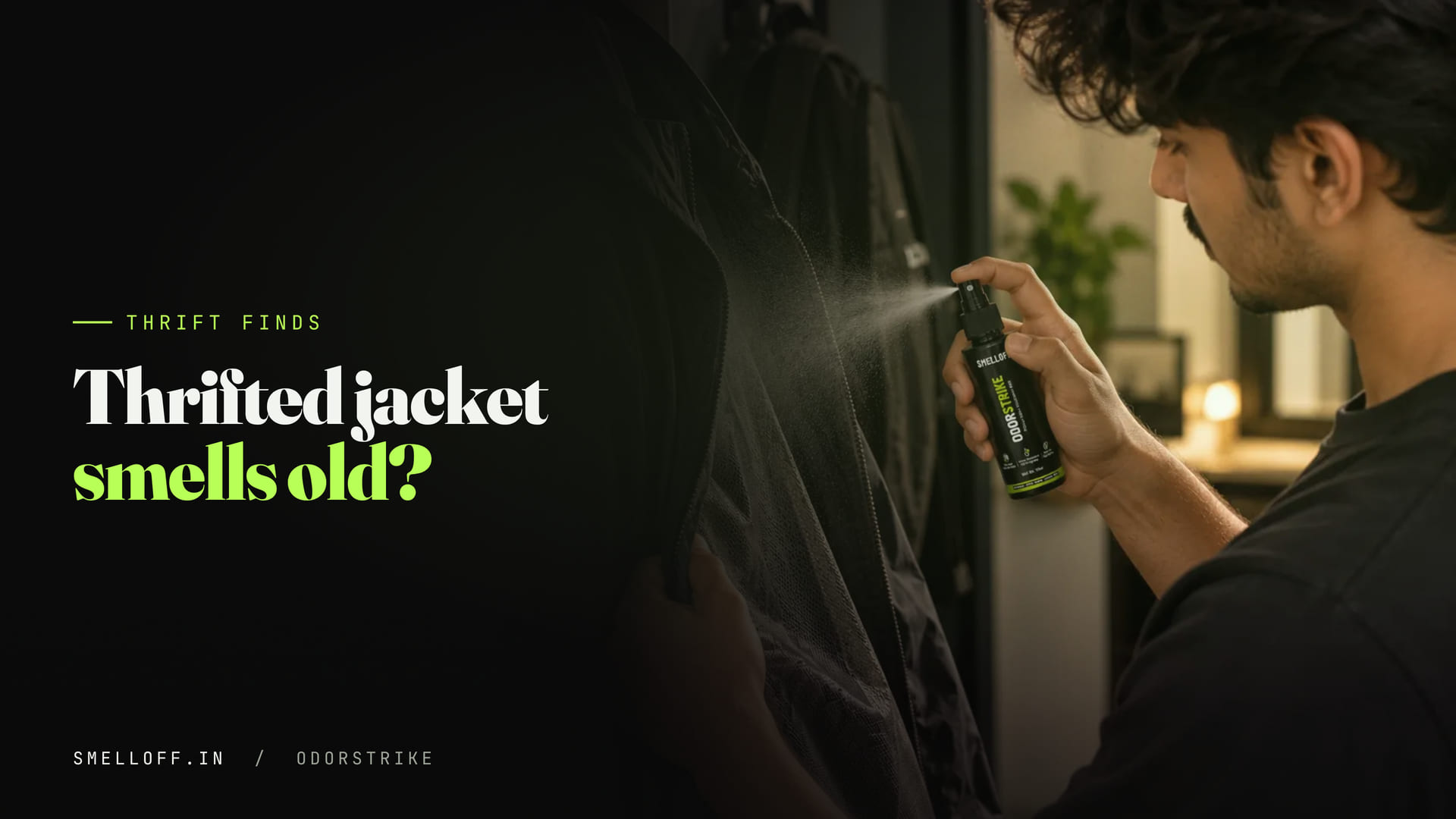
Wash anything washable first, on the warmest setting the label allows, and dry it fully in moving air. For jackets, blazers and wool that cannot be washed often, air them for a day, brush them, then treat the lining, collar and underarms with a fabric odor spray and let it dry. Repeat once if needed.
In this guide5 sections
The vintage denim jacket for ₹600, the oversized wool blazer from an export-surplus stall, the barely worn shirt from an Instagram thrift drop — preloved clothes are one of the best deals in Indian fashion right now. Then you open the parcel and it smells of a cupboard you have never seen.
Thrifted clothes usually carry one of four smells. Each has a different source, and the right fix depends on which one you have.
What causes the smell on second-hand clothes?
Storage, the previous owner's body odor, their perfume or detergent, or damp. Often it is two of these at once.
| What it smells like | Likely cause | Where it sits |
|---|---|---|
| Dusty, stale, "old cupboard" | Long storage in closed bags or bales | Whole garment, folds |
| Sour, sweaty | Previous owner's body odor | Underarms, collar, waistband |
| Heavy perfume or strong detergent | Their scent or softener | Whole garment |
| Musty, mildew | Damp storage or shipping | Seams, pockets, lining; may show spots |
| Naphthalene, "mothball" | Moth protection in storage | Whole garment |
Should you wash thrifted clothes before wearing them?
Yes, if the label allows it — every time, regardless of smell. You do not know where it has been, and a wash also tells you whether the colour runs before you wear it with something white.
Wash on the warmest temperature the care label allows, with a normal dose of detergent and no fabric softener (softener coats fibres and can trap smell). Turn the garment inside out so the underarms and collar get the most contact with water. Then dry it fully in moving air, not folded on a damp line. Synthetics such as polyester deserve extra attention: research from Ghent University published in Applied and Environmental Microbiology found polyester shirts held stronger, less pleasant body odor than cotton after wear, and that odor survives a quick cold cycle more easily.
How do you deal with jackets, blazers and wool?
Air, brush, treat the lining, repeat. These are often the best thrift finds and the ones you cannot simply throw in the machine.
- Air it for a full day on a wide hanger in moving air, out of direct harsh sun. Open all buttons and pockets. Empty the pockets; old receipts and tissues hold smell.
- Brush it with a clothes brush, especially the shoulders and collar where dust settles.
- Treat the zones that hold body odor: the inner collar, the underarm area of the lining and the upper back lining. Mist from 15–20 cm, 5–6 sprays across a jacket. ODORSTRIKE uses HPβCD to trap odor molecules and Zinc PCA to neutralise them; it is safe on cotton, polyester, denim, wool and blends.
- Let it dry fully, then air again overnight. A strong smell may need a second round the next day.
Wool is on your side here. Rachel McQueen's research at the University of Alberta found wool the least odorous of the fibres tested, with cotton low to medium and polyester the worst. A smelly wool blazer usually clears with airing and treatment; a smelly polyester one may need a wash or a dry cleaner. Our blazer guide has the full routine.
What about mothball and musty smells?
Both need time in moving air before anything else. Naphthalene is designed to turn slowly into vapour, and it clears by airing, not by perfume or a quick wash. Musty smells come from damp; the garment must be dried completely, and if there are mildew spots, washing is required. We cover both in detail in mothball smell and musty storage smell.
When should you give up on a thrifted piece?
When it still smells after two full rounds of washing or treatment, or it has visible mildew on a dry-clean-only fabric. Deep mildew in a lining, smoke in heavy foam shoulder pads, or a synthetic that has held body odor for years can be beyond home care. Ask the seller about returns before you buy, smell the underarms in person at flea markets, and avoid pieces with dark spotting in the seams.
A fabric odor spray clears smell from clothes; it does not clean them. Wash washable thrifted clothes before wearing. Do not spray leather, suede or dry-clean-only pieces, and patch-test silk, zari and embroidery. Fabric only, never skin.
Sources
Callewaert, C. et al. Microbial odor profile of polyester and cotton clothes after a fitness session. Applied and Environmental Microbiology, 2014. pmc.ncbi.nlm.nih.gov
University of Alberta. How to minimize the lingering smell on your workout clothes (Rachel McQueen). Folio, 2018. ualberta.ca
Frequently Asked Questions
Should I wash thrifted clothes before wearing them?
Yes, every washable piece, on the warmest setting the care label allows, without fabric softener, then dry it fully in moving air.
How do I get the smell out of a thrifted jacket I can't wash?
Air it for a day with pockets emptied, brush it, then mist the inner collar, underarm lining and upper back lining with a fabric odor spray and let it dry. Repeat the next day if needed.
Why do second-hand polyester clothes smell more?
Polyester holds body odor more than cotton or wool, as studies from Ghent University and the University of Alberta found, so a previous owner's smell survives in it longer.
Can I use a fabric spray on a thrifted leather jacket?
No. ODORSTRIKE is not for leather or suede. Air leather and use a leather-care product, or a specialist cleaner.
How do I remove musty smell from preloved clothes?
Dry the garment completely in moving air. If there are mildew spots, wash it. Then treat any remaining smell in the seams and lining with a fabric odor spray.
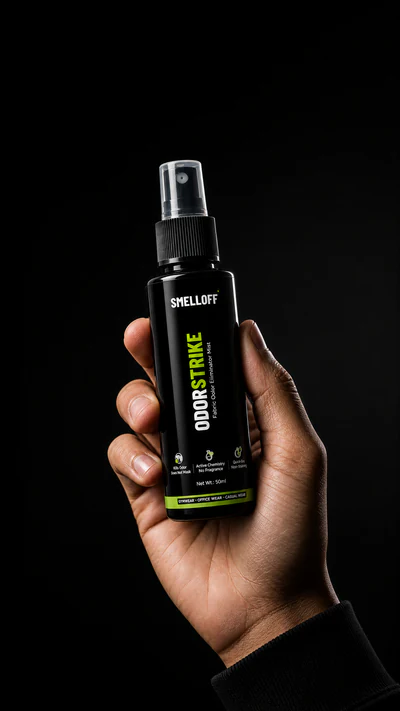
ODORSTRIKE — Fabric Odor Mist
50ml pocket spray for clothes. HPβCD traps odor molecules in the fabric and Zinc PCA neutralises them, instead of covering them with perfume. Dries in 15–30 seconds, up to 8 hours of odor protection on fabric under normal office/commute conditions. Fabric only, never skin.