
Clothes Smell Musty After Storage? Why, and How to Fix It

Storage changes the environment around fabric. Heat, humidity, low airflow and traces of soil or odor can turn a clean-looking garment into a musty one.
Clothes can smell musty after storage because fabric kept in a closed, humid environment has little airflow and can retain moisture and volatile compounds. If a garment went into storage even slightly damp or carried residual odor, the enclosed wardrobe can make the smell much more obvious.
In this guide4 sections
“Clean” and “odor-free” are not identical. A garment may be visually clean while still carrying low levels of odorants, skin oils or detergent residue. Inside a closed cupboard, those compounds have nowhere to disperse.
Does storing clothes slightly damp really matter?
Yes. Moisture is the first thing to eliminate. Never pack clothing while cuffs, collars or seams are still damp. One damp item can change the small environment inside a closed storage space and transfer odor to nearby fabric.
Why do winter clothes smell after months in storage?
Seasonal garments spend a long time compressed with limited ventilation. Dust, skin residue, perfumes and household odors can accumulate. When the wardrobe is opened months later and fabrics warm up, trapped volatile compounds become easier to notice.
How do you freshen stored clothes without washing everything?
Take everything out and separate it. Air garments fully, inspect for visible mould or dampness, and wash anything genuinely dirty. For clothing that is clean but carries residual odor, use a fabric odor treatment after the garment is completely dry.
When should you actually wash the garment?
Wash it when there is visible soil, sweat, body-oil buildup, stains or persistent odor that does not respond to airing. Odor treatment is a between-wash tool, not a replacement for laundering when the garment needs laundering.
Air the space. Dry the garment. Then treat residual odor. Do not use fragrance to hide a damp storage problem.
Textile studies show that fibres interact differently with odorants, so some fabrics may hold onto stored smells more stubbornly than others. See textile sorption research.
Frequently Asked Questions
Can clothes become smelly just from being stored?
Yes. A closed environment can trap humidity and volatile compounds that were barely noticeable before storage.
How should I store clothes to prevent musty smell?
Store only fully dry garments, avoid overpacking and reduce humidity in the storage environment.
Can a fabric odor spray fix stored-clothing smell?
It can help with residual odor on a clean, dry garment, but visible mould or heavy contamination needs proper cleaning or replacement.
Why do clothes start to smell after being stored?
A closed, humid space traps volatile compounds on fabric that were barely noticeable going in. Store only fully dry garments, avoid overpacking, air them before wearing, and mist residual odor on clean cloth. Visible mould needs cleaning or replacement, not a spray.
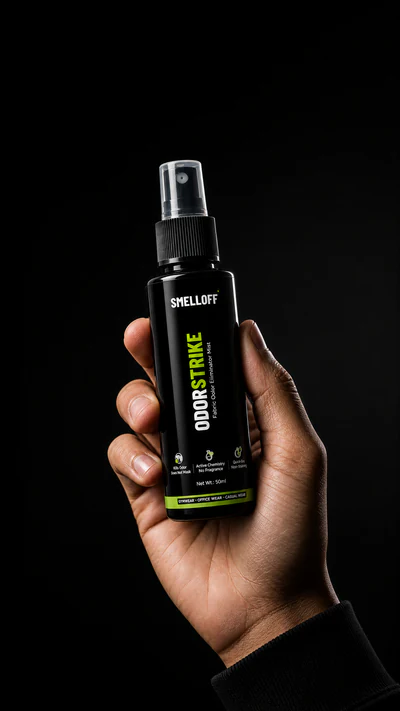
ODORSTRIKE — Fabric Odor Mist
50ml · ₹229 · Clothing fabric only
Buy now — ₹229 View product details