
Linen Shirts and Cotton Kurtas: Stay Fresh in Summer
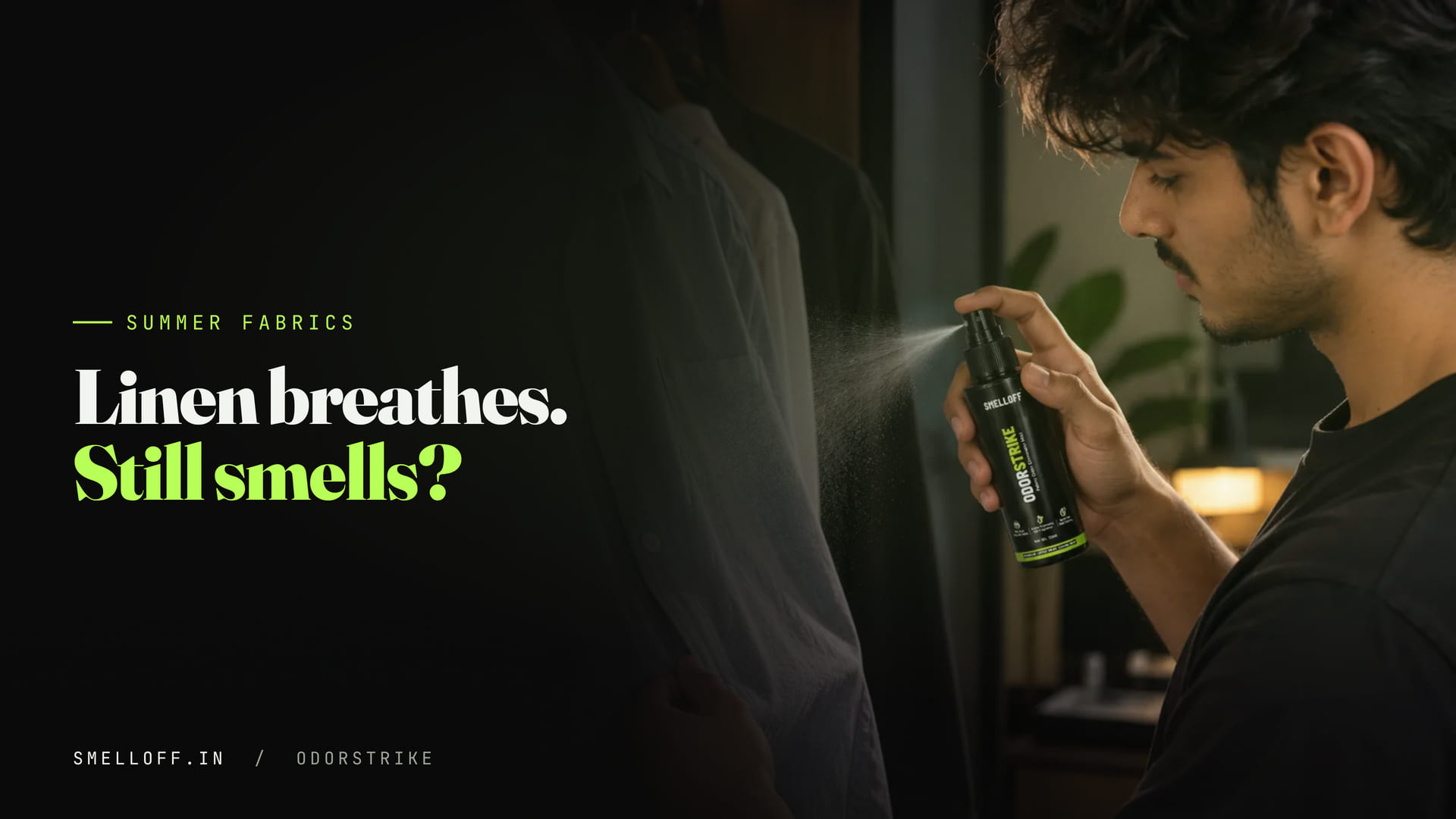
Linen shirts and cotton kurtas are what India wears when the temperature crosses 38°C, and for good reason. But "breathable" does not mean "does not smell". How these fabrics handle sweat, why a kurta can smell by evening, and a routine that keeps them fresh without washing after every wear.
How do you keep linen shirts and cotton kurtas fresh in summer?
Wear them loose, over a thin cotton vest where possible, and hang them open in moving air as soon as you take them off. Before rewearing, sniff the underarms, neckline and back; treat those zones with a fabric odor spray and let them dry. Patch-test linen first, and wash after heavy sweating.
In this guide5 sections
A good cotton kurta or linen shirt is the best answer to an Indian summer. Both fibres pull moisture off the skin and let air through the weave. But they pull that moisture — and the body oils that come with it — into themselves. That is why a crisp white kurta can smell faintly sour by 6 pm even though you felt cool all day.
Do linen and cotton hold body odor?
Less than polyester, but they do hold sweat and need airing. Natural fibres absorb moisture readily, which keeps you cool but also takes sweat into the yarn.
Textile scientists measure this as moisture regain: the water a dry fibre takes up from the air. Published values put flax (linen) at about 12% and cotton at about 8.5%, against well under 1% for polyester. High regain is why linen feels cool. A Ghent University study in Applied and Environmental Microbiology found polyester shirts smelled worse than cotton after wear, so natural fibres are the better choice — but a well-worn cotton kurta still needs attention.
| Fabric | Moisture regain (approx.) | What it means in summer |
|---|---|---|
| Linen (flax) | 12% | Feels coolest; dries fast; creases |
| Cotton | 8.5% | Comfortable; holds sweat in the yarn |
| Cotton-polyester blend | In between | Less creasing; holds more odor |
| Polyester | Under 1% | Sweat sits on the surface; holds body odor |
Where does a kurta start to smell first?
The underarms, the neckline and the back, where the kurta touches skin and stays damp. Long kurtas also collect sweat at the lower back where you sit. Loose cuts smell later than slim ones because air moves between fabric and skin.
The shirt zones guide explains why the same places smell first on every garment.
How do you refresh a kurta or linen shirt between wears?
Air first, then treat the zones that still smell.
- Hang it open on a hanger as soon as you take it off, in moving air or under a fan. Do not fold it damp.
- Turn it inside out so the underarms face the air.
- Sniff the zones the next morning: underarms, neckline, back.
- Treat what still smells. Mist the inside of those zones from 15–20 cm, 2–3 sprays each, with a fabric odor spray. ODORSTRIKE traps odor molecules with HPβCD and neutralises them with Zinc PCA instead of adding perfume.
- Let it dry for 15–30 seconds before wearing. On a light cotton it dries fast.
ODORSTRIKE is made for cotton, polyester, denim, wool and blends. Linen is not on that list, so spray an inside seam first and check it once dry before you treat the whole underarm. Do the same on silk, zari, embroidery and block-printed or hand-dyed kurtas, where colour can be less stable.
How many times can you wear a kurta before washing?
In peak summer, usually once if you sweated; twice if you were mostly indoors and it passes the sniff test. A white kurta also shows sweat lines at the collar, which only washing removes. Our rewear guide has the full rule by garment.
How do you wash summer cottons and linen so they stay fresh?
Gentle, cool to warm wash, inside out, and dry in shade with air.
- Wash hand-block-printed and dyed kurtas separately at first; colours can bleed.
- Dry inside out in shade: strong May sun fades colour fast, and the inside is where the smell is.
- Dry fully before folding. Linen dries quickly; thick cotton kurtas in monsoon do not — see drying clothes indoors.
- Iron linen while slightly damp; ironing does not fix smell on its own, as the ironing guide explains.
A fabric odor spray keeps clean clothes fresh between washes. It does not remove sweat lines, stains or yellowing, and does not replace washing. Fabric only, never skin.
Sources
Moisture regain of natural and synthetic fibres (table). Bioresources and Bioprocessing, 2020. bioresourcesbioprocessing.springeropen.com
Callewaert, C. et al. Microbial odor profile of polyester and cotton clothes after a fitness session. Applied and Environmental Microbiology, 2014. pmc.ncbi.nlm.nih.gov
Frequently Asked Questions
Does linen smell less than cotton?
Linen absorbs moisture readily and dries quickly, so it often feels fresher in heat. Both hold some sweat in the yarn and smell less than polyester.
Can I use ODORSTRIKE on a cotton kurta?
Yes. Cotton is one of the fabrics it is made for. Patch-test block-printed, hand-dyed, silk, zari or embroidered kurtas on an inside seam first.
Can I use a fabric spray on a linen shirt?
Patch-test first. Linen is not on ODORSTRIKE's tested fabric list, so spray an inside seam and check it once dry.
Why does my kurta smell sour by evening?
Sweat and body oils soak into cotton and skin bacteria break them down through the day, especially at the underarms, neckline and back.
How do I stop sweat marks on a white kurta?
Wear a thin cotton vest underneath and wash after heavy sweating. A fabric odor spray does not remove sweat marks.
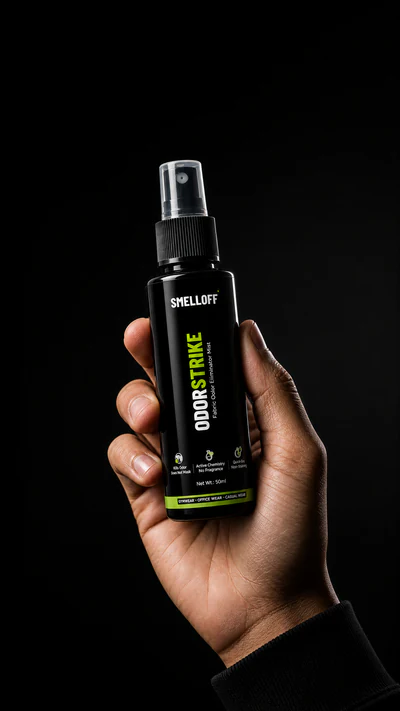
ODORSTRIKE — Fabric Odor Mist
50ml pocket spray for clothes. HPβCD traps odor molecules in the fabric and Zinc PCA neutralises them, instead of covering them with perfume. Dries in 15–30 seconds, up to 8 hours of odor protection on fabric under normal office/commute conditions. Fabric only, never skin.