
Does Ironing or Steaming Remove Smell From Clothes?
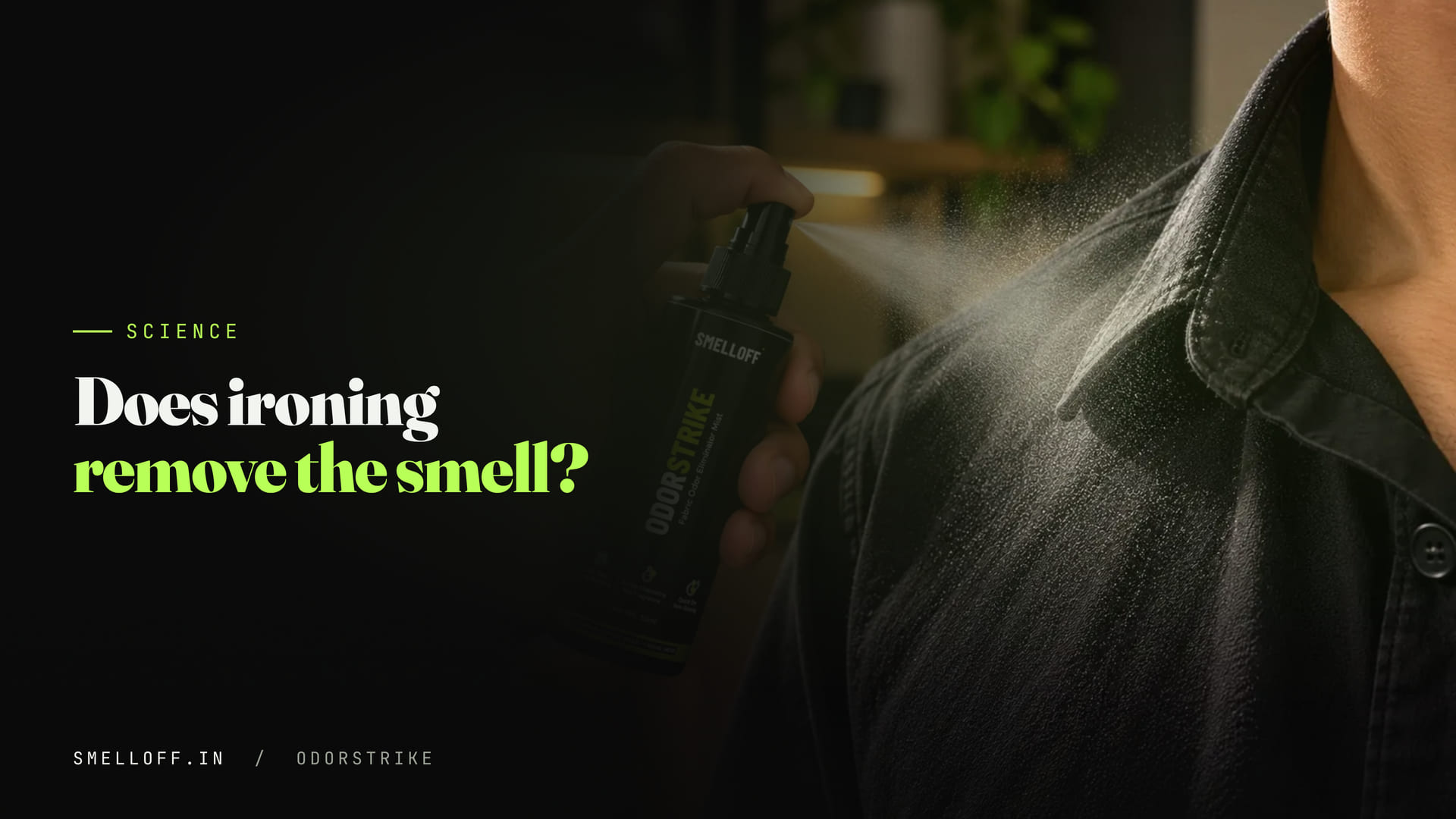
You iron a shirt you wore once and the room fills with the smell of yesterday. Heat and steam change how odor behaves in fabric, sometimes for the better and sometimes not. What ironing and a garment steamer really do to a smell, and the order that works.
Does ironing remove smell from clothes?
Only partly. Heat drives off some volatile odor molecules, which is why a worn shirt smells stronger while you iron it. But ironing does not remove the sweat, skin oil or bacteria that produce the smell, so it returns once you wear the shirt. Iron clean clothes, and treat a worn shirt's collar and underarms before pressing it.
In this guide6 sections
Ironing day tells you which shirts were really clean. The worn-once formal shirt that seemed fine on the hanger suddenly smells of sweat and deodorant the moment the iron touches the underarm. That burst of smell is useful information, and it explains why heat is not a fix.
Why does a shirt smell stronger when you iron it?
Heat makes odor molecules evaporate faster, so the iron releases what was sitting quietly in the fibres. Nothing new was created; you are just smelling more of what was already there.
Odor molecules leave a surface at a rate that rises steeply with temperature. A shirt at room temperature releases very little; the same shirt under a sole plate at 150–200°C releases a burst. That is also why a shirt smells worse once it warms against your body, and worse again when it gets damp — the mechanism behind why clothes smell louder when wet.
So does the heat get rid of the smell?
It removes the most volatile fraction, not the source. The smell fades after ironing and comes back once you wear the shirt.
Body odor on fabric is a system: skin oils and sweat residues in the fibres, bacteria living on them, and the odor molecules those bacteria keep producing. The American Society for Microbiology describes how skin bacteria turn odorless sweat compounds into sulphur-containing thioalcohols. A pass of the iron drives off some odor molecules that are already there, but the oils and residues stay. Put the shirt on, warm it to body temperature, add a little fresh sweat, and production starts again — often by lunchtime.
Can ironing a sweaty shirt make it worse?
Yes. Heat can set sweat stains and darken the yellow line on a collar. Ironing over sweat residue and skin oil bakes them into the fibre, which makes them harder to wash out later.
That is why dry cleaners and laundry guides say to press only clean garments. If a shirt has a visible collar line or underarm discolouration, wash it before ironing. If it only has a light smell from one wear, treat it first (below).
Does a garment steamer remove odor?
A steamer helps a little more than an iron, because steam carries some odor molecules away, but it adds moisture. It is good at refreshing a jacket or a kurta that has picked up a light room smell, and poor at dealing with sweat.
| Method | What it does to odor | Risk |
|---|---|---|
| Dry iron | Drives off volatile odor; smell returns when worn | Sets sweat stains and collar lines |
| Steam iron / steamer | Carries off some odor with the steam | Leaves fabric damp, which can bring smell back |
| Airing in moving air | Removes loose odor slowly, costs nothing | Not enough for sweat zones |
| Fabric odor mist, then iron once dry | Traps and neutralises odor in the zones, then press | Patch-test silk and zari |
| Wash, then iron | Removes the source | Wear and tear on the fabric |
After steaming, always let the garment hang until it is completely dry before you fold it or put it in the almirah. Damp folds are how a fresh-smelling kurta turns musty overnight, which our drying guide covers.
What is the right order: spray, then iron?
Treat the smell first, let the fabric dry fully, then iron. Ironing over damp spray just steams it off before it has done its job.
- Sniff the collar, underarms and upper back. If there is a visible mark or a sour smell, wash instead.
- Mist those zones with a fabric odor spray from 15–20 cm: 2–3 sprays per zone, 4–5 for a full shirt. ODORSTRIKE uses HPβCD to trap odor molecules and Zinc PCA to neutralise them.
- Let it dry completely, 15–30 seconds in normal conditions, longer in humid weather or on thick cotton.
- Iron as usual on the setting the label allows. On silk and synthetics, use a pressing cloth.
What about the presswala?
Send clean clothes, not worn ones. The neighbourhood istriwala uses a heavy charcoal or electric iron at high heat. A worn shirt comes back crisp and smelling of hot sweat, and any collar line comes back set. If you want to rewear formal trousers or a shirt once more before washing, treat and air it at home first, then send it for pressing. Our office trousers guide has the routine for formals.
Neither heat nor a fabric spray cleans fabric. A fabric odor spray does not remove sweat stains or collar lines and does not replace washing. Fabric only, never skin. Patch-test silk, zari and embroidery.
Sources
American Society for Microbiology. The Microbial Origins of Body Odor. ASM.org, 2021. asm.org
University of Alberta. How to minimize the lingering smell on your workout clothes (Rachel McQueen). Folio, 2018. ualberta.ca
Frequently Asked Questions
Why does my shirt smell bad when I iron it?
Heat makes odor molecules already in the fabric evaporate faster, so ironing releases a burst of smell from sweat and skin oil left in the fibres. It means the shirt was not fully clean.
Does steaming clothes remove odor?
A steamer carries off some odor molecules and is good for light room or travel smells on jackets and kurtas. It does not remove sweat residue, and it leaves the fabric damp, so let it dry fully afterwards.
Is it bad to iron a sweaty shirt?
Yes. Heat can set sweat stains and the yellow line on a collar, making them harder to wash out. Wash it first, or treat a light smell before ironing.
Should I spray fabric spray before or after ironing?
Before. Spray the collar, underarms and back, let the fabric dry fully, then iron. Ironing over damp spray steams it off.
Does high heat kill the smell in clothes for good?
No. Ironing removes some odor molecules on the surface, but the residues that produce smell stay in the fabric, so the smell returns once the shirt is worn and warmed.
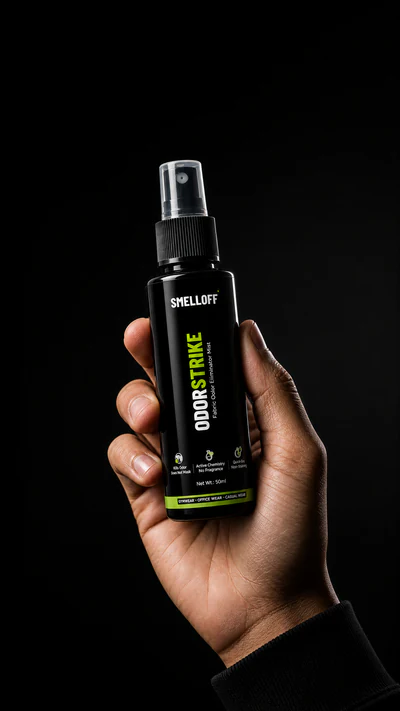
ODORSTRIKE — Fabric Odor Mist
50ml pocket spray for clothes. HPβCD traps odor molecules in the fabric and Zinc PCA neutralises them, instead of covering them with perfume. Dries in 15–30 seconds, up to 8 hours of odor protection on fabric under normal office/commute conditions. Fabric only, never skin.