
Zinc PCA for Fabric Odor: What It Is and Why It Works

Most fabric sprays fight odor after it has already formed. Zinc PCA works at the molecular level — neutralizing the volatile compounds that create the smell. Here's the science and how it compares to baking soda and fragrance sprays.
Quick answer
What is zinc PCA and how does it work on fabric odor?
Zinc PCA is a zinc-based active that neutralises fabric odor by binding to the volatile sweat compounds, so they can no longer turn volatile and reach your nose. Rather than masking with fragrance, it deactivates the smell at its source in the fibres. It is the neutralising layer in ODORSTRIKE, paired with HPβCD that traps odor molecules, and dries clear with no stiff residue.
In this guide6 sections
Every guide to fabric odor eventually arrives at the same culprit: bacteria breaking down sweat into volatile fatty acids and sulfur compounds. Sweat itself is nearly odourless — it's the volatile byproducts that produce the sour, sharp smell. Most fabric sprays attack the smell after it exists by masking it. Zinc PCA is interesting because it works chemically on the volatile compounds themselves. If you've seen it on an ingredient list and wondered what it actually does, here's the full picture.
We'll cover what zinc PCA is, how sweat becomes smell, the specific mechanism, how it compares to baking soda and fragrance sprays, and why a zinc-based formula makes sense for fabric.
What is zinc PCA?
Zinc PCA is the zinc salt of pyrrolidone carboxylic acid (PCA). PCA occurs naturally in skin as part of its moisture system; bound to zinc, it becomes a stable compound valued for two properties: it binds and neutralizes odor-causing compounds, and it helps regulate oil (sebum). It's used in skincare, haircare and increasingly in textile and fabric-care formulas for exactly these reasons.
It's colourless and odourless, which matters for a fabric application — you don't want an active that yellows a white shirt or carries its own smell. Used in a spray, it deposits onto the fibres and stays active where sweat compounds accumulate.
Zinc compounds have a long track record in odor control more broadly — zinc salts have been used for decades in deodorants and fabric care precisely because zinc ions bind to and neutralize volatile fatty acids while being gentle and stable. Zinc PCA brings that established zinc chemistry to fabric in a form that's well-tolerated and easy to formulate into a clear, light spray.
How do bacteria cause fabric odor?
Fresh sweat is mostly water, salts and a little oil. On its own it barely smells. The problem starts when skin bacteria — which transfer onto your clothes as you wear them — metabolise the oils and amino acids in that sweat. Their waste products are the volatile compounds we recognise as body odor: isovaleric acid, butyric acid, sulfur compounds.(American Society for Microbiology)
On fabric, volatile compounds keep releasing as long as residue and warmth remain in the weave. This is why a shirt smells worse the longer it sits unwashed, and why odor returns quickly after a perfume treatment — the volatile acids are still trapped in the fibres. Neutralize those volatile compounds and you cut the smell off at the fibre level.
It also explains why the same person can smell fine in one shirt and sour in another worn the same day. The variable isn't always how much you sweat — it's how much trapped odor residue and leftover oil the fabric is already carrying. A garment that's been freshened and aired starts each wear with a clean slate, so it takes far longer to develop a noticeable smell.
How does zinc PCA work on odor?
Zinc PCA works on two fronts. First, it binds volatile odor compounds: zinc ions chemically complex with thiol and carboxylic acid groups, rendering them non-volatile so they no longer evaporate into the air.
Second, it's oil-regulating. Because body odor depends on residue and sweat oils clinging to fibres, reducing the oily film gives less material for ongoing breakdown. Together these mean a garment treated with a zinc-based active doesn't just smell clean now — it's slower to develop fresh odor as you wear it, which is the property you actually want between washes.
Think of fabric odor as a fire. Fragrance sprays blow smoke away (you smell perfume instead). Encapsulators like cyclodextrin catch the smoke (trap the odor molecule). Neutralizers like zinc PCA deactivate the volatile embers (complex with the odor molecules). The best results come from doing more than one of these at once.
Zinc PCA vs baking soda and fragrance sprays: which works?
The two things most people reach for instead are baking soda and fragrance sprays — and zinc PCA works differently from both. Baking soda absorbs a little moisture and buffers acidic odor, but it sits on the surface as a powder, does not chemically bind volatile sweat compounds, and has to be brushed out. Fragrance sprays add a smell on top of the smell — pleasant for twenty minutes, then the sweat odor returns layered with stale perfume. Zinc PCA instead binds the volatile sweat compounds directly so the odor is deactivated in the fibre rather than covered or merely soaked up.
That's why a named zinc active on the label matters. Baking soda and 'parfum' are cheap to list; a functional neutralizer that actually treats the cause signals a formula built to handle odor rather than perfume over it. Zinc PCA is a cosmetic-grade active used at low concentration on fabric — colourless and dries clear — so the point for a buyer is simple: it's doing chemistry on the smell, not hiding it.
Quality zinc actives used at fabric-care concentrations are colourless and dry clear, so they don't stain whites or light colours. As with any spray, mist lightly rather than soaking, and on delicate or embroidered fabric test a hidden area first.
Why does ODORSTRIKE use a zinc-based formula?
We built ODORSTRIKE on a zinc-based approach because fabric odor requires molecular neutralization — binding volatile compounds directly rather than chasing the smell with fragrance. It deposits onto the fibre, neutralizes trapped odor compounds, and works alongside molecular capture to eliminate the smell that's already there.
The practical result is a spray that doesn't just freshen for twenty minutes. On a fabric eliminator built this way, the odor stays gone because you've treated the cause, not just the symptom — and it dries clear in seconds on cotton, polyester, denim and linen so you can use it on the way out the door.
Source
American Society for Microbiology. The Microbial Origins of Body Odor. ASM.org, 2021. asm.org
Frequently Asked Questions
Why is zinc PCA used in fabric odor sprays?
Zinc PCA is used in fabric odor sprays because it neutralises odor compounds instead of perfuming over them, and it is gentle on cloth and dries clear. It binds the fatty acids and volatiles behind sweat smell so they stop becoming airborne. In ODORSTRIKE it works alongside HPβCD, which physically traps odor molecules, giving a two-part neutralise-and-trap action rather than a fragrance mask.
Is zinc PCA better than baking soda for clothes smell?
Zinc PCA tends to work better than baking soda for clothes smell because it treats the cause rather than the surface. Baking soda absorbs a little moisture and buffers acidity, but it sits on the fabric as a powder, does not chemically bind odor molecules, and has to be brushed out. Zinc PCA binds and neutralizes volatile sweat compounds, and in a spray like ODORSTRIKE it dries clear with no powder residue, paired with HPβCD that traps odor molecules.
Is zinc PCA safe on clothing fabrics?
Zinc PCA is safe on everyday clothing fabrics, because it is used at low concentration in a water-based spray that dries clear on cotton, polyester and denim. It leaves no stiffness or marks when applied as a light mist. As with any spray, avoid soaking one spot and test delicate or embroidered fabric in a hidden area first.
Does zinc PCA leave stains on light-coloured clothing?
Zinc PCA does not stain light-coloured clothing when it is formulated into a clear, water-based spray like ODORSTRIKE, which dries without residue or yellowing. It carries no heavy oils or dyes that would mark white cotton or pale synthetics. Mist it evenly rather than concentrating it in one patch, and let it dry 15–30 seconds before wearing.
How long does zinc PCA keep fabric fresh?
Zinc PCA helps keep fabric fresh for up to 8 hours per application in a spray like ODORSTRIKE, because it neutralises the odor compounds in the fibres rather than masking them. One even mist on the collar, underarms and back before wear usually lasts a full day. You reapply the next time you wear the garment instead of topping up hourly.
Is zinc ricinoleate the same as Zinc PCA on clothes?
No. Smelloff does not use zinc ricinoleate. Formula v3.1 uses Zinc PCA and Zinc Gluconate on fabric, with HPβCD. Older Smelloff URLs about zinc ricinoleate redirect here.
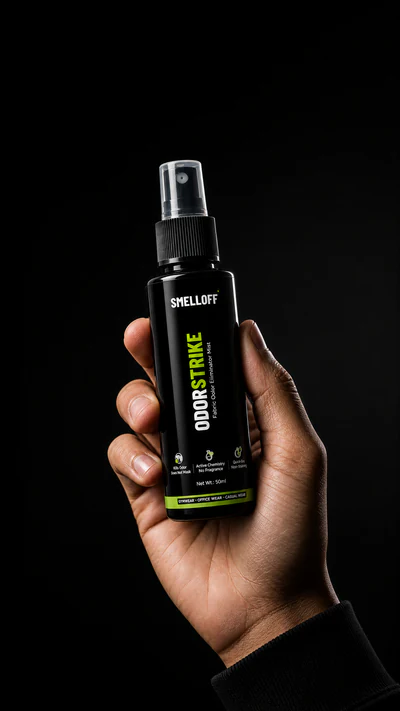
ODORSTRIKE — Fabric Odor Mist
50ml pocket spray. Zinc-based formula. Works on cotton, polyester, denim, blends, wool. Dries clear in 15–30 seconds with no stiff residue. Fabric only.
Read Next
Beta-Cyclodextrin: How It Traps Odor Molecules in Fabric