
How an Odor Neutralizer Works on Fabric: Cage, Not Cover
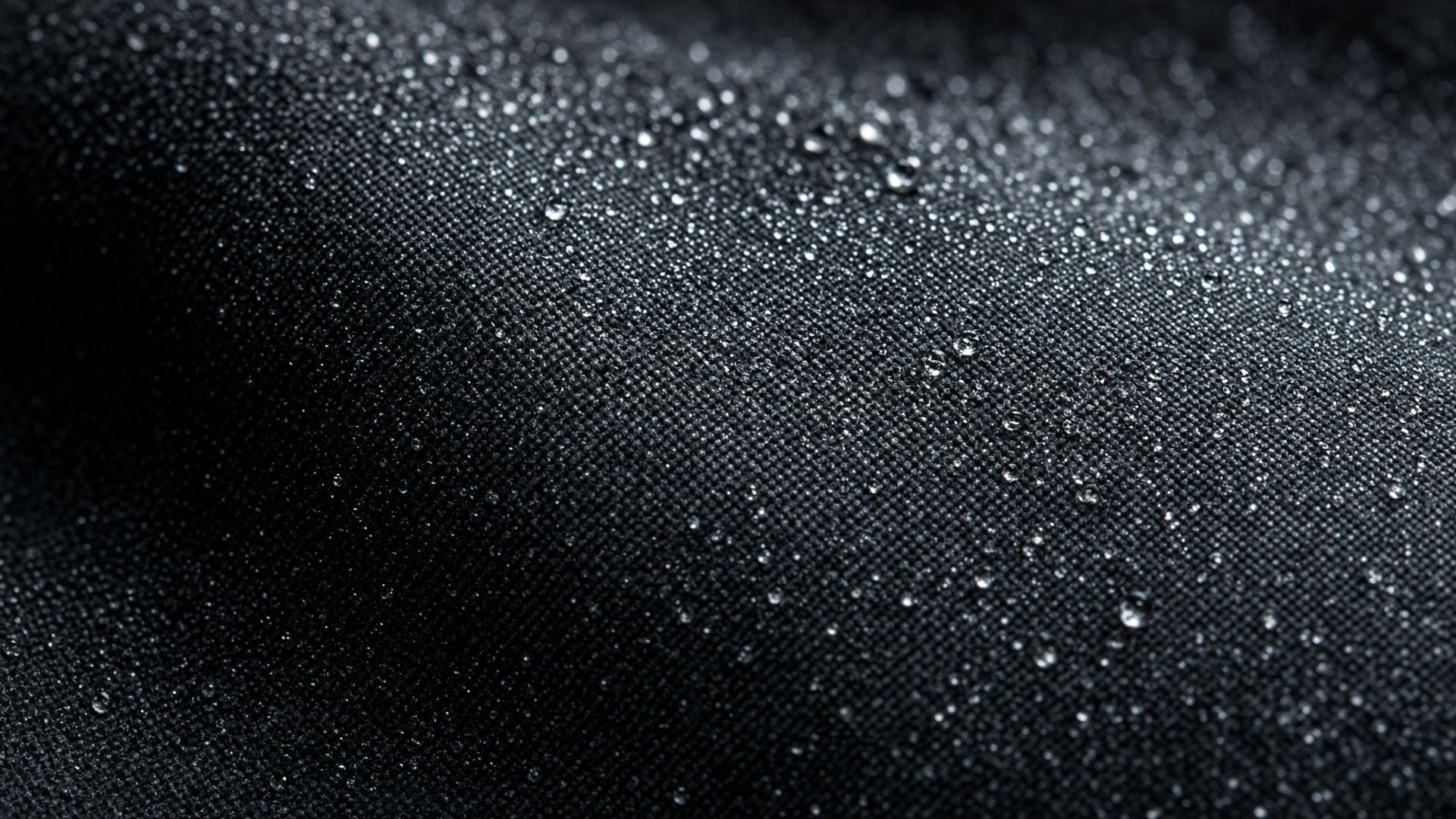
A fabric odor mist is a stack: a cage that traps the molecule, zinc that quiets it, citrate that slows the next batch. Cover is not a mechanism.
Cover is not a mechanism. A fabric odor neutralizer is a stack: a cage that traps the molecule, zinc that quiets it, citrate that slows the next batch, a second zinc that makes comeback harder, a fast-dry solvent that delivers all of that and leaves, and — if there is a scent — a light fragrance that is supposed to fade. Read the stack on the label. Do not read a slogan. This is a category map, not a trial card, and the cavity chemistry of HPβCD has its own page.
In this guide11 sections
- Cover is not a mechanism
- Neutralise, on fabric, means the molecule stops reaching you
- Read the stack, not the slogan
- Trap is one layer. The cavity has its own page.
- Quiet: zinc that binds the acids
- Slow the next batch: triethyl citrate
- Limit the comeback: zinc gluconate
- The solvent's job is to arrive and leave
- Fragrance that fades is a finish, not the work
- How to read a fabric-odor label
- Category map, not a trial card
If the job is 'make it smell like something else', you are holding perfume. If the job is 'stop the odor molecule reaching a nose, on cloth, then get out of the way', you are holding a stack. Most bottles in Indian chemist shops and Amazon listings are the first job printed as the second.
Cover is not a mechanism
Cover occupies you. A strong jasmine, a 'linen breeze', an aerosol blast in a changing room — your nose is busy, so the sweat acids have a roommate. When the volatile fraction of that roommate leaves, the acids are still in the weave. Sometimes they have mixed. The mash is a known failure; the deodorant-and-perfume page is where that panic lives. A neutralizer, if it is one, has to do something to the odorant itself: trap it, bind it, slow the chemistry that makes the next pulse. Fragrance can ride along. Fragrance cannot be the plot.
Cover
Fragrance
- Keeps your nose busy with a louder smell
- The sweat acids are still in the cloth
- When the scent fades, the smell is back
Stack
Neutralise
- Trap: HPβCD holds odor molecules
- Quiet: Zinc PCA binds the volatile acids
- Slow: Triethyl Citrate helps hold back new odor
If the first ingredient story is a scent name, it is a cover
Meadow. Cotton. Ocean. Those are not actives. A real stack names molecules: a cyclodextrin, a zinc salt, a citrate ester, a solvent that is supposed to leave. If the label cannot say what cages or quiets, it is asking your nose to do the work for ten minutes.
Neutralise, on fabric, means the molecule stops reaching you
Odor is not a stain and not a vibe. It is a small volatile molecule leaving a fibre and hitting an olfactory receptor. Neutralise, in this category, is any honest way of taking that molecule out of the air: hold it in a cavity so it cannot evaporate, convert a volatile acid into a less volatile salt, starve the reaction that would have made the next acid. Kill is a marketing verb. Most fabric mists are not biocides, and should not pretend to be. Quiet is the better word. The shirt is not sterile. It is less loud.
Laundry additives that change pH in a drum, baking soda in a bucket, vinegar in a rinse — those are other jobs, and they have a page. A leave-on mist has to work in seconds, on a garment you are about to wear, without a rinse. That constraint is why the stack looks the way it does: trap and bind what is already there, slow what is about to form, dry before you walk into the room.
Read the stack, not the slogan
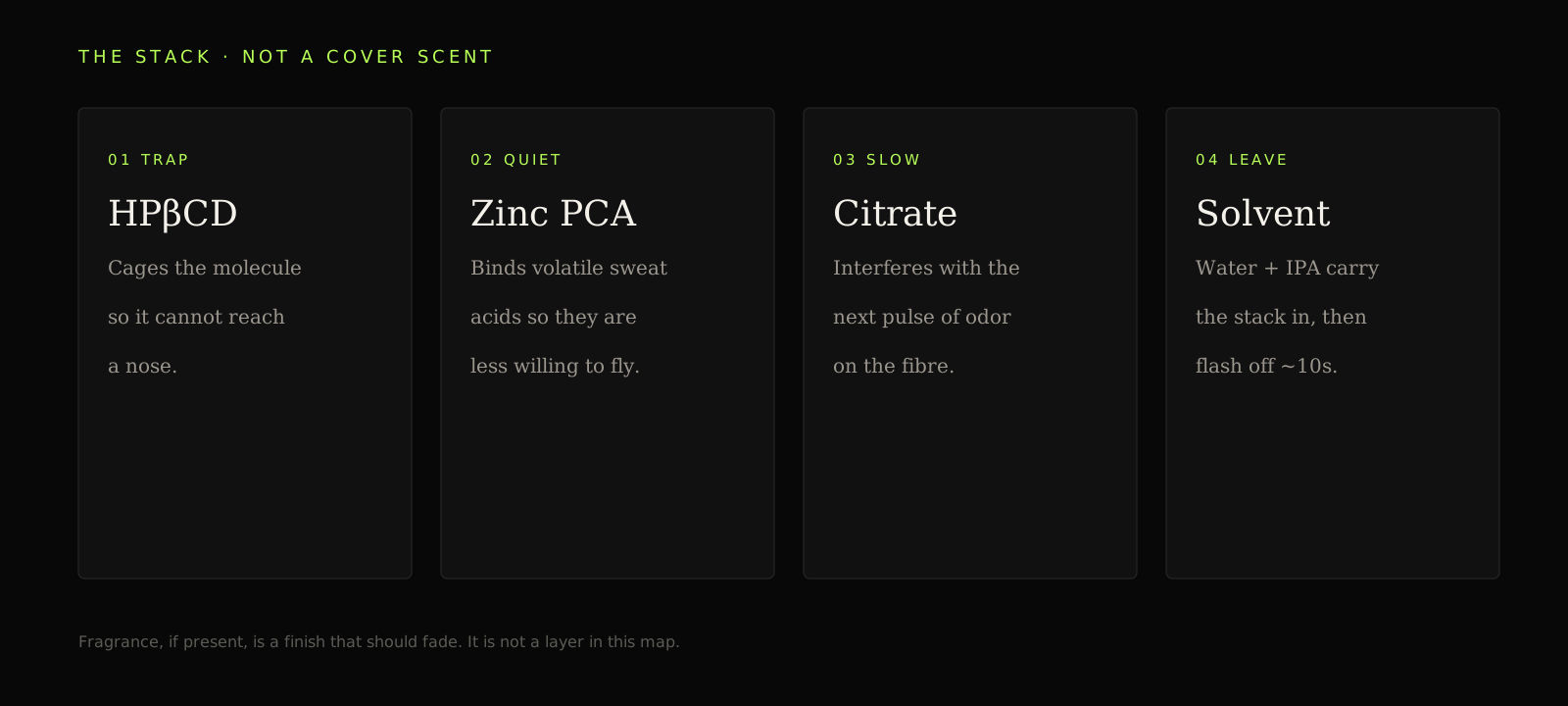
A competent clothing mist is layers with different clocks. One layer handles the odorant that exists. One handles the next hour of sweat landing on that fibre. One is only delivery. One, if present, is manners — a short hello, then silence. Miss a layer and you still have a product. Miss the trap and the quiet and you have a room spray in a smaller bottle.
| Layer | Typical name on a label | What it is for | What it is not |
|---|---|---|---|
| Trap | HPβCD / hydroxypropyl-β-cyclodextrin | Cage an odorant so it stops reaching the nose | Not the whole formula. The molecule has its own explainer. |
| Quiet | Zinc PCA | Bind volatile sweat acids so they are less willing to fly | Not a perfume. Not an antiperspirant plug. |
| Slow | Triethyl citrate | Interfere with the breakdown of fresh sweat on the fibre | Not a kill-step. Not a fragrance fixer pretending to work. |
| Limit comeback | Zinc gluconate | Make it harder for odor to rebuild in the cloth between wears | Not a steriliser. Not a substitute for washing a dirty garment. |
| Deliver and leave | Fast-drying water base | Carry actives into the yarn, then flash off in 15–30 seconds | Not the active. Alcohol alone is the deodorant failure mode. |
| Finish | Light fragrance | A light, low scent in the background | Not unscented. Not a perfume. Not the mechanism. |
Trap is one layer. The cavity has its own page.
HPβCD is the trap layer in this stack: hydroxypropyl-β-cyclodextrin, named on the label, doing the cage job. What the ring is, why the hydroxypropyl form sprays, which odorants fit, and why plain cyclodextrin is a worse bottle — that is the HPβCD page. This page will not steal it. If you searched 'cyclodextrin fabric spray', read the stack here, then go there for the molecule.
Feed the molecule page, do not copy it
A cyclodextrin trap on cotton is a documented way to take up pungent odor vapours. That is why a trap layer is real. The molecule-level explainer has its own URL. Here, HPβCD is a layer among layers: necessary, not sufficient, not a slogan by itself.
Quiet: zinc that binds the acids
Zinc PCA is a zinc salt of pyrrolidone carboxylic acid. In a fabric mist its useful habit is to bind the volatile acids behind sweat smell — the isovaleric, the butyric, the sharp small ones — so they are less available to the air. Trap holds. Quiet chemically occupies. You want both on a shirt that has already been worn, because not every odorant is a perfect guest for the cage, and not every acid stays put just because a ring is nearby.
This is also why a zinc that clogs a nozzle or dusts a dark formal is the wrong zinc. Residue is a different failure. A fabric formula that dries clear is choosing a salt that does the bind without leaving a chalk. The ingredients page lists what was left out of ODORSTRIKE on purpose. This page only needs the job: quiet the acids that already exist.
Slow the next batch: triethyl citrate
A shirt you put back on will get new sweat. Fresh sweat is still nearly odorless. The smell is the breakdown. Triethyl citrate is an ester used in deodorising formulas to get in the way of that step: it is a competing substrate for the bacterial enzymes that chew lipids into those short acids, and as it hydrolyses it can lower local pH on the fibre. On cloth, the claim to make is modest. It does not stop you sweating. It does not clean sebum out of a polyester pit. It slows how fast a newly wet panel becomes loud. That is the 'up to 8 hours' layer, and 'up to' is doing work. A desk day in AC is not a humid two-wheeler plus a gym.
Limit the comeback: zinc gluconate
The fourth active in this particular stack is another zinc, gluconate this time, aimed at the gap between wears. Cloth that has been quieted can start talking again as leftover film and leftover organisms get water. Zinc gluconate is the sustained freshness layer: not a hospital, not a biofilm strip, a limit on how quickly the fibre becomes stale overnight on a hanger. If a shirt is already a reservoir — months of under-washing, a finish clogged with softener — this layer is theatre. Wash that one. The loudness stack is a different article.
The solvent's job is to arrive and leave
The carrier drives the mix into the yarn and then evaporates. That flash is the 15–30 second dry; in high humidity it can be 30–60 seconds, and anyone who tells you a water-alcohol mist is instant in July in Mumbai is selling. Fast dry is not a personality. It is how you avoid a wet patch that itself makes odor louder, and how you avoid a humectant film. Glycerine, on a dark shirt, is how you get a tacky island that collects lint. A solvent system that leaves is the difference between a clothing mist and a damp apology.
Alcohol in a deodorant, dumped on a sweaty shirt, is a failure. Alcohol in a fabric stack, carrying actives into a dry-enough garment and then going, is delivery. Same family of solvent. Opposite job. If all you spray is alcohol and perfume, you are back on the mash page.
Fragrance that fades is a finish, not the work
ODORSTRIKE is not unscented. The formula has a light, subtle fragrance. That sentence is a limit, not a flourish. A truly silent liquid is harder to check in the hand and easier to overspray. A perfume that stays is a cover. The honest middle is a hello that leaves so the stack can be judged on whether the sweat note is gone, not on whether the bottle smells like a mall.
No percentages, no 8-hour guarantee
A stack is a map of jobs, not a lab certificate. Concentrations are not this page's to invent. 'Up to 8 hours on fabric under normal office or commute conditions' is a window on cloth, shortened by heat, humidity, and how dirty the garment already was. It is not a claim about skin. It is not a wash replacement. It is not a trial result dressed as a mechanism.
How to read a fabric-odor label
Ignore the front. The front will say kill, 72 hours, Himalayan something. Turn it over. You want a named trap, a named zinc or equivalent quiet, a solvent that should dry, and a fragrance that does not dominate the list. You want fabric only — not skin, not a room. You want the absence of oils, dyes, and sticky humectants if the shirt is one you would notice a mark on. Home refreshers in 300ml cans can use a related trap and still be the wrong object: they are built to scent a sofa. A pocket 50ml is built to be in a bag at 3pm. Format is part of the category.
A one-minute claim test, no lab
- Find the actives, not the mood — If the label cannot name a trap or a zinc, treat it as perfume. If it names HPβCD, go read the molecule page before you decide the word is magic.
- Check where it is allowed to go — Skin, hair, 'body spray', 'all over' — wrong category. Fabric only is the point. A deodorant-versus-mist comparison already exists; do not buy a hybrid that is shy about the surface.
- Spray a hidden seam, wait a full dry — 15–30 seconds in ordinary air, longer in humidity. If it stays tacky, darkens, or chalks, the delivery layer is failing you. Stop.
- Smell at one minute and at twenty — At one minute you will smell solvent and any fragrance. At twenty you should be judging the sweat note, not the bottle. If the bottle is still the loudest thing, you bought a cover.
- Do not skip the wash on a dirty garment — A stack on a soiled, soaked, or film-heavy shirt is theatre. Neutralise is for odor in a clean-enough weave. Dirt, oil, and stains are laundry.
- Read the stack: trap, quiet, slow, dry, a fragrance that knows when to leave.
- Use a fabric mist on fabric, light passes, 15–20 cm, inside collar, pits, upper back.
- Send cyclodextrin questions to the HPβCD page. This page is the map around it.
- Keep deodorant on skin. The failure of putting it on cloth is a different article.
- Do not treat a heavy cover-scent as an eliminator because the cap says 'for clothes'.
- Do not invent or trust invented percentages. Jobs, not numbers, are the map.
- Do not spray it on skin, hair, leather, suede, or a dripping garment.
- Do not use this page as a wear-test writeup. It is a category map. No trial dressed as science.
Category map, not a trial card
Perfume covers. Deodorant manages skin. Laundry additives fight a drum. A fabric odor eliminator — if the words are earned — is a leave-on stack for cloth you will wear before the next wash. Vinegar and baking soda are not that stack. A sofa spray with a cyclodextrin and a huge fragrance is only half a cousin. The buying ranking of sprays in India is another URL. The molecule is another. The skin-versus-shirt category is another. This one exists so those pages are not asked to explain every layer at once.
The 200ml 'fabric perfume' on the chemist shelf
It will be cheap, sweet, and honest in its way: it is a room scent with a clothes claim. It will not dry in 15–30 seconds on a formal you have to get back into. It will not name zinc. It will still be sold next to deodorant, which is how people end up spraying the wrong category on a 3pm shirt. Pocket, fabric-only, named stack. That is the filter. Hyderabad heat is why the dry-time and the 'up to' window have to be said without swagger.
If the stack above is the job you want, ODORSTRIKE Formula v3.1 is Smelloff's 50ml version of it: HPβCD to trap, Zinc PCA to quiet, triethyl citrate to slow the next batch, zinc gluconate to limit the comeback, a fast-dry solvent, a light fragrance that fades. Not unscented. Not a perfume. Not for skin. Does not replace washing. 15–30 seconds to dry, up to 8 hours on fabric under a normal office or commute — not a guarantee. ₹229 prepaid. Cash on Delivery available. Made in Hyderabad. For the ring itself, read the HPβCD page.
50ml fabric-only mist. Formula v3.1. Prepaid UPI ₹229. Cash on Delivery available. Light, subtle scent. Not a wash. Not for skin.
- Odor Absorption Performance of Cotton Fabrics Functionalized with Beta-Cyclodextrin — Fibers and Polymers (2025) — Cyclodextrin-treated cotton takes up pungent odor vapours by forming inclusion complexes. That is the trap layer. The molecule-level explainer belongs on the HPβCD page. Source
- American Society for Microbiology — The Microbial Origins of Body Odor (2021) — Sweat smell is bacterial breakdown products — volatile acids and related compounds — not sweat itself. A fabric stack has to trap or quiet those molecules, not perfume around them. Source
- Jungbunzlauer — CITROFOL AI (triethyl citrate) technical note — Triethyl citrate is used as a deodorising ester that interferes with enzymatic breakdown of sweat components and can lower local pH as it hydrolyses. On fabric it is the slow-the-next-batch layer, not a fragrance. Source
- Callewaert et al. — Applied and Environmental Microbiology (2014) — Odor intensity on worn cloth depends on fibre and the microbes that live there. A leave-on stack is treating the garment as the surface that holds the smell, which is why delivery into the yarn matters. Source
Frequently Asked Questions
How does an odor neutralizer work on clothes?
By a stack, not by a smell. A cage such as HPβCD traps odorants. A zinc salt such as Zinc PCA quiets volatile acids. Triethyl citrate slows the breakdown of fresh sweat on the fibre. Zinc gluconate limits how fast odor rebuilds. A water-alcohol solvent delivers that mix and should dry in 15–30 seconds. Fragrance, if present, should fade. Cover is not in that list.
Is cyclodextrin the whole story?
No. It is the trap layer. The cavity, the hydroxypropyl form, and which molecules fit are owned by the HPβCD page. A spray that only cages and then drowns you in scent is still a cover with a science word on it. Read the rest of the stack.
Does a fabric odor spray kill bacteria?
Do not buy that verb unless a specific biocide is named and regulated as such. Most clothing mists quiet odorants and slow the chemistry of new ones. The shirt is not sterile. Quiet is enough for a between-wash wear. Dirty cloth still needs a wash.
Why is there fragrance if the point is not perfume?
A light, subtle scent is a finish so the spray is checkable and the dry-down is not a blank chemical hole. It should stay in the background. If it is the loudest thing on the shirt, the bottle is doing cover. ODORSTRIKE is not unscented. It is also not a perfume.
What does 'up to 8 hours' mean?
A protection window on fabric under ordinary office and commute conditions. Heat, humidity, activity, and how soiled the garment already was all shorten it. It is not a guarantee, not a skin claim, and not a licence to skip washing.
Can I use an odor neutralizer instead of washing?
No. It does not remove dirt, oils, or stains. It does not strip a reservoir of old residue. It resets odor on a clean-enough garment you need to wear. If the hanger already smells tired, wash.
Is this the same as deodorant on a shirt?
No. Deodorant is a skin product and fails on cloth — salts, waxes, mash. A fabric mist is built for fibre and is not for skin. Use both in their places. The category comparison is the deodorant-versus-mist page. This page is how the fabric side does its quieting.
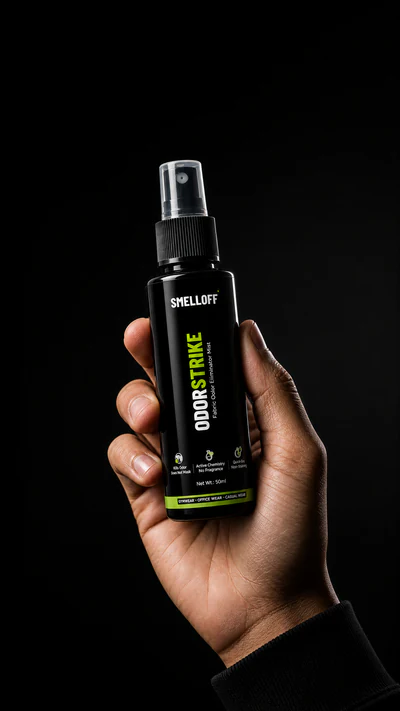
ODORSTRIKE — Fabric Odor Mist
50ml · ₹229 · Cash on Delivery available · For clothing fabric only
Buy now — ₹229 View product details