
What Colour Shirt Hides Sweat Best?
You can see a sweat patch from across the office on some shirts and not at all on others. The difference is mostly light, not sweat. Here is which colours hide it, which give you away, and what colour cannot do.
Which shirt colour hides sweat best?
White, black, deep navy and busy checks or small prints hide sweat patches best. Mid grey, light blue, khaki, pastels and bright solid colours show them most. A wet patch looks darker because water fills the gaps between fibres and less light scatters back. Colour only hides the mark: the sweat, and the smell it turns into, is still in the shirt.

ODORSTRIKE 50ml · pocket size
Clothing deodorant: neutralizes sweat, smoke and food smell in the fabric. Never on skin.
Use it when a shirt, kurta or pair of jeans looks clean but holds a little of yesterday's sweat.
Cash on Delivery · Free shipping on prepaid · Ships from Hyderabad within 48 hours
We deliver within India only.
See how ODORSTRIKE worksIn this guide6 sections
Two men take the same metro and sit through the same 3 PM meeting. One has a dark half-moon under each arm, the other looks dry. Often they are sweating just as much. One of them is wearing light blue.
Why do sweat patches show on some colours and not others?
Because wet fabric reflects less light, and the eye notices that change most on mid-tones.
A dry shirt scatters light from millions of tiny fibre surfaces. When sweat soaks in, water fills the gaps and more of the light is trapped and absorbed instead of bouncing back, so the patch looks darker. Physicists Lekner and Dorf described this effect in Applied Optics in 1988. On a black or deep navy shirt there is very little light left to lose, so the change is hard to see. On white the patch darkens only slightly. Mid-tones such as grey, light blue and khaki have the most room to darken, and that is where a patch jumps out.
Which colours hide sweat best, and which show it most?
Worst: heather grey and mid grey. Best: black, navy and busy patterns.
- Mid grey, heather greyShows it most
- Light blue, pastels, khakiShows it clearly
- Bright solid coloursShows it
- Maroon, darker bluesShows up close
- WhiteHides the colour change; wear a vest
- Black, navy, charcoal, fine checksHides it best
Colour hides the mark, not the smell: the sweat is still in the fabric.
- Shows sweat most: mid and heather grey, light blue, sky blue, pastel pink and mint, khaki and beige, and bright solid colours such as red or green.
- Middle: darker blues and maroon. The patch shows up close, less from across a room.
- Hides sweat best: black, deep navy, charcoal, and white. Checks, stripes and small prints break up the edge of a patch so the eye does not find it.
White has one catch: thin white cotton can turn see-through where it sticks to damp skin. A vest underneath fixes that, which our guide on wearing a vest under your shirt covers.
Do patterns and fabric help hide sweat?
Patterns help a lot; fabric helps a little. A fine check or an oxford weave hides a patch that a plain poplin in the same colour would show.
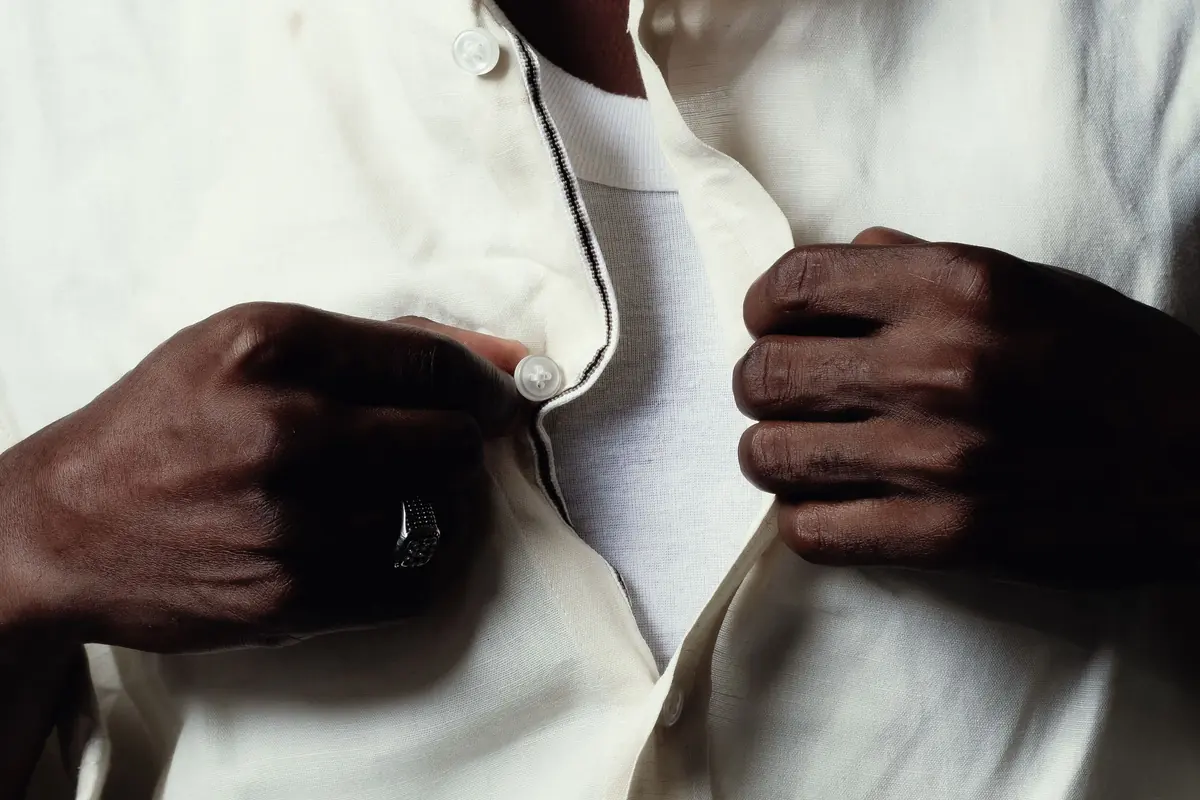
Thicker cotton and twill take longer to soak through. Linen and loose cotton dry faster, so a patch fades sooner once you cool down. Smooth synthetic office shirts can cling and show a sharp-edged mark. If you are choosing between two shirts for a hot commute day, pick the darker or busier one.
What else hides underarm sweat patches?
Stop the sweat reaching the shirt, or slow it down.
- A cotton vest takes the first layer of sweat before it reaches the shirt.
- Sweat pads or shields, the thin pads that stick inside the underarm of a shirt, catch it at the source. They are worth trying on important days.
- An antiperspirant at night on dry skin reduces how much you sweat, which a deodorant does not. Our guide to deodorant vs antiperspirant explains the difference.
- A blazer or overshirt hides everything, though it adds heat.
Does hiding the patch hide the smell?
No. The patch dries; the sweat stays in the fabric, and skin bacteria turn it into smell over the next few hours.
That is why a navy shirt can look perfect at 5 PM and still smell at the underarms. The colour changed what people see, not what is in the cloth. Treat the fabric itself: after it has dried, a few sprays of a clothing deodorant for underarm panels from 15–20 cm on the underarms and collar. ODORSTRIKE uses HPβCD to trap odour molecules and Zinc PCA to neutralise them, dries in 15–30 seconds, and gives up to 8 hours of odour protection on fabric under normal office/commute conditions. It goes on the shirt, never on skin. Why a clean shirt starts to smell at all is explained in why a clean shirt smells within hours.
What should a sweat-proof office wardrobe look like?
Lean on dark and patterned shirts for the hottest days, and keep grey and light blue for cool, AC-only days.
- Two white shirts with a vest underneath, for meetings.
- Two navy or charcoal shirts for commute-heavy days.
- One or two fine checks for days you will be outdoors.
- Grey, light blue and pastels for days you sit in air conditioning from door to desk.
How many to own in total, and how to rotate them, is in our guide to how many office shirts you need.
Colour hides the look of sweat, not the sweat. If a shirt still smells after washing, the fix is a better wash; a fabric spray is for clean shirts between washes. Heavy sweating that soaks through every shirt is worth mentioning to a doctor.
Sources
Lekner, J. and Dorf, M. C. Why some things are darker when wet. Applied Optics, 1988. wgtn.ac.nz
Frequently Asked Questions
Does black hide sweat?
Yes. Black and deep navy already absorb most light, so a wet patch barely changes how they look. In strong sun, dried sweat salts can leave pale marks on very dark shirts.
Does white show sweat?
Less than most colours, because white only darkens slightly when wet. Thin white cotton can turn see-through where it sticks, so wear a vest underneath.
Why does grey show sweat so badly?
Mid grey has the most room to darken when water fills the fabric, so the contrast between a wet and dry patch is strongest.
Do sweat pads work?
They catch underarm sweat before it reaches the shirt, which helps with both the mark and the smell. They do not stop you sweating.
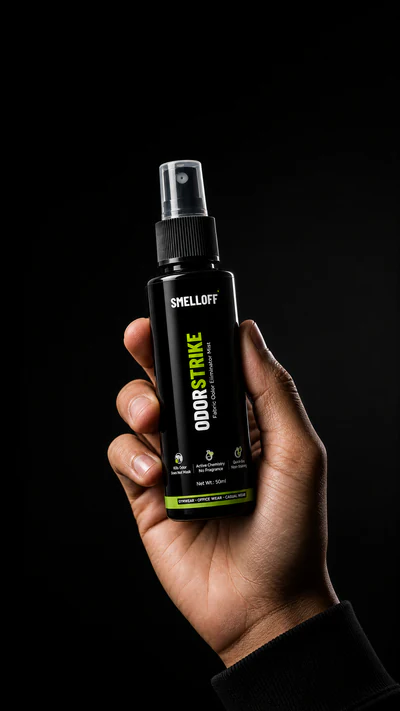
ODORSTRIKE — Fabric Odor Mist
50ml pocket spray for clothes. HPβCD traps odor molecules in the fabric and Zinc PCA neutralises them, instead of covering them with perfume. Dries in 15–30 seconds, up to 8 hours of odor protection on fabric under normal office/commute conditions. Fabric only, never skin.
Buy now View product details