
Why Do New Clothes Smell of Chemicals? Wash Before Wearing
Open a new shirt and there it is: a sharp, faintly chemical smell, sometimes vinegary or fishy. It is not the fabric. It is what was done to the fabric on its way to you. Here is what it is, and the simplest fix.
Why do new clothes smell of chemicals, and should you wash them first?
New clothes can carry finishing chemicals such as wrinkle-resistant resins (some release formaldehyde), dye residues, sizing and warehouse or packing smells. A US Government Accountability Office test of 180 textiles found most had low formaldehyde, but 10 exceeded the strictest industry limits, mostly wrinkle-free and non-iron cotton. Washing before wearing usually reduces these residues and the smell.
In this guide6 sections
You unfold a new shirt and get a whiff of something sharp. Sometimes it is faintly vinegary, sometimes oddly fishy, sometimes like the inside of a shop. It is not your imagination, and it is not the cotton.
What is the chemical smell on new clothes?
Finishes, dyes, sizing and packing, not the fibre itself. Several things can contribute.
- Wrinkle-resistant finishes: resins that make cotton "non-iron" or "easy-care". Some release small amounts of formaldehyde.
- Dye residues and fixatives: leftover dye chemistry, often stronger on dark colours.
- Sizing and softeners: applied to make fabric stiff for cutting or soft for the shop.
- Packing and warehouse smell: plastic bags, cardboard, long sea freight in damp containers.
Some people notice a fishy or vinegary note on a new garment. Either way, it points to processing chemicals rather than the fibre, and it is a signal to wash first.
Is formaldehyde in clothes a concern?
For most people, at typical levels, no; for people with sensitive skin, it can cause allergic reactions.
- 180
- items tested: 165 clothing, 15 bed linens
- 10
- exceeded the strictest industry limits
- 206 ppm
- the highest: a 100% cotton wrinkle-free dress shirt
Washing before wearing often reduces formaldehyde levels.
The US Government Accountability Office tested 180 textile items in 2010 (165 pieces of clothing and 15 bed linens). It concluded that formaldehyde levels in clothing generally appear low, but that 10 items exceeded the most stringent limits set out by industry, at 75.4 to 206.1 parts per million. The highest was a men's 100% cotton wrinkle-free dress shirt; the list included non-iron shirts and men's cotton khakis. The report notes that allergic contact dermatitis from formaldehyde in clothing is a real health issue for some people.
Does washing new clothes remove the chemicals?
It usually reduces them, though not always completely.
The same GAO report states that washing clothing before it is worn often reduces formaldehyde levels but is not always successful, depending on the type of finish, water hardness and other factors. In practice, one normal wash removes most sizing, loose dye and packing smell, and reduces finishing residues.
- Wash new clothes before the first wear, especially shirts, innerwear and anything for children.
- Wash dark new items separately the first time; loose dye runs.
- Air dry in moving air; if a smell remains, wash again.
- If you have sensitive skin, a second wash for non-iron shirts is sensible.
Should you spray new clothes instead of washing?
No. A fabric odour spray is not a substitute for washing off finishing chemicals.
ODORSTRIKE is made for sweat and everyday odour that builds up in clean clothes while you wear them. It is not designed to remove manufacturing residues, and spraying a new shirt does not wash anything off it. Wash new clothes first; once they are in your rotation, a fabric spray is useful for the collar and underarms between washes. Here is what ODORSTRIKE is for, and what it is not.
What about new clothes that smell musty or of mothballs?
That is storage smell, and airing plus washing clears it.
Clothes that sat in a warehouse or a shop stockroom can pick up damp or naphthalene smell. Air them, then wash. Our guide to mothball and almirah smell covers the stubborn cases.
Which new clothes need washing most?
Anything worn next to skin, anything labelled non-iron or wrinkle-free, and anything for a child.
- Innerwear, vests and socks.
- Non-iron and easy-care shirts and trousers.
- Children's clothes.
- Dark denim and deep colours (for dye, not formaldehyde).
A fabric odour spray does not remove manufacturing chemicals, dyes or finishes. Wash new clothes before wearing them. If a new garment causes itching or a rash, stop wearing it and see a doctor.
Sources
U.S. Government Accountability Office Formaldehyde in textiles: while levels in clothing generally appear to be low, allergic contact dermatitis is a health issue for some people (GAO-10-875). GAO, August 2010. gao.gov
Frequently Asked Questions
Why do new clothes smell like chemicals?
Finishing chemicals such as wrinkle-resistant resins, dye residues, sizing and packing smells. The fabric itself is not the source.
Should you wash new clothes before wearing them?
Yes, especially innerwear, non-iron shirts and children's clothes. A US GAO report found washing often reduces formaldehyde levels, though not always completely.
Is formaldehyde in clothes dangerous?
In a GAO test of 180 items, most had low levels, but 10 exceeded the strictest industry limits. For some people it can cause allergic skin reactions.
Can I use a fabric spray on new clothes instead of washing?
No. A fabric odour spray does not remove manufacturing residues. Wash first; use the spray later for sweat smell between washes.
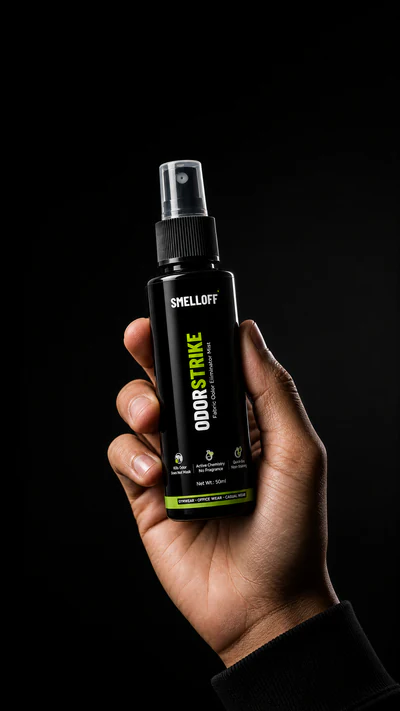
ODORSTRIKE — Fabric Odor Mist
50ml pocket spray for clothes. HPβCD traps odor molecules in the fabric and Zinc PCA neutralises them, instead of covering them with perfume. Dries in 15–30 seconds, up to 8 hours of odor protection on fabric under normal office/commute conditions. Fabric only, never skin.
Buy now View product details