
How to Get Bonfire Smoke Smell Out of Clothes
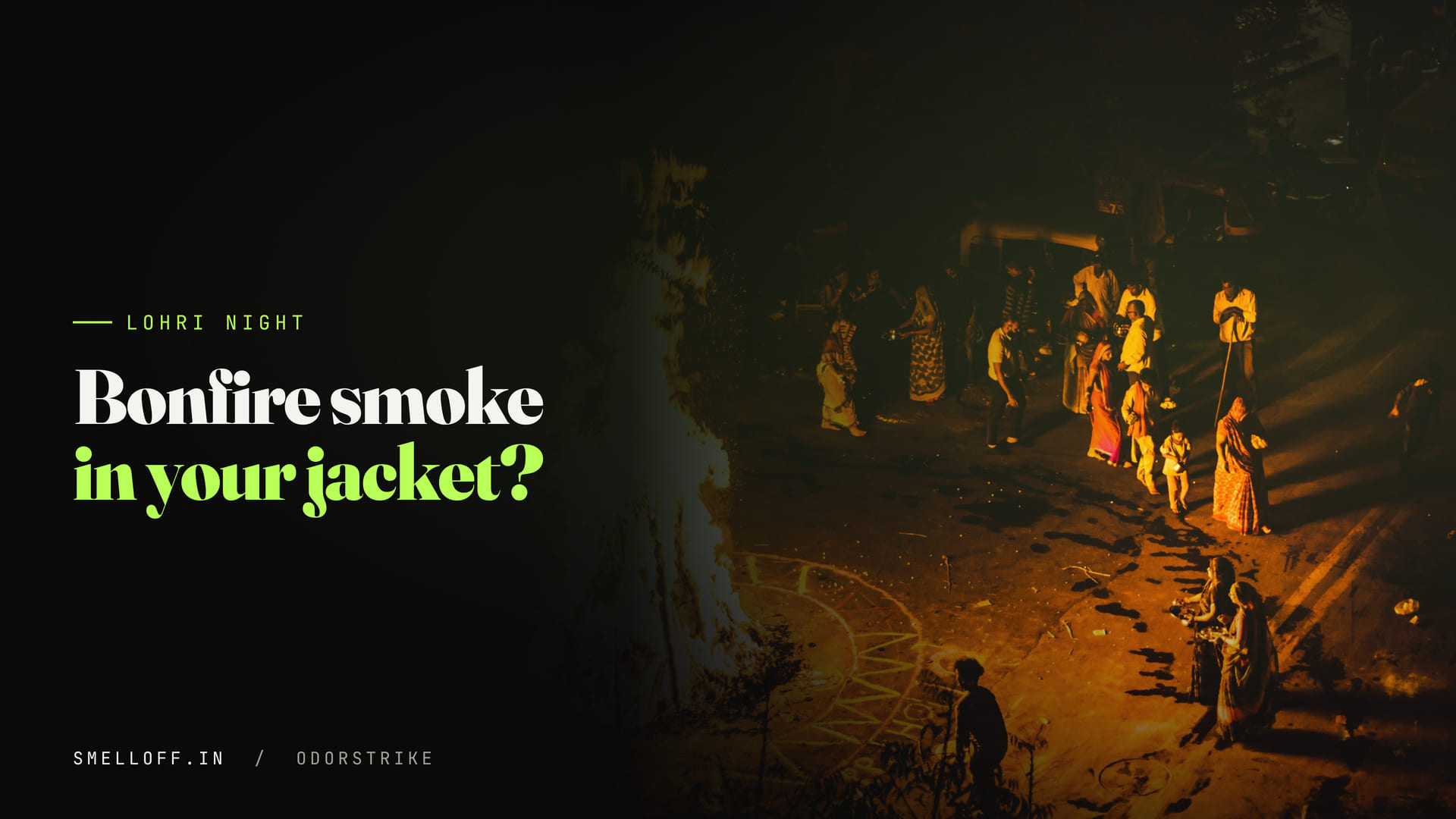
Lohri night, a barbeque on the terrace, an angithi on a Delhi winter evening: the fire is the best part, and the smell in your jacket the next morning is the worst. Here is how to get wood smoke out of clothes without washing everything you own.
How do you get bonfire smell out of clothes?
Take the outer layers off before you go to bed and hang them outside or by an open window, not in the wardrobe or a laundry pile. The next morning, air them again inside out and treat the collar, cuffs and front panel, where smoke settles most. Wash anything washable; jackets and shawls you cannot wash get more airing and a fabric mist on the lining.

ODORSTRIKE 50ml · pocket size
Clothing deodorant: neutralizes sweat, smoke and food smell in the fabric. Never on skin.
Use it when Lohri or barbeque smoke has come home in your jacket lining.
Cash on Delivery · Free shipping on prepaid · Ships from Hyderabad within 48 hours
We deliver within India only.
See how ODORSTRIKE worksIn this guide6 sections
On Lohri night in Punjab and across North India, families stand around the fire for hours, throwing in rewri, peanuts and popcorn. The same thing happens at a farmhouse barbeque or around an angithi on a cold night. Everyone goes home warm and smelling like a chimney.
Why does bonfire smoke cling to clothes?
Wood smoke is a mix of gases and very fine particles, and both settle into fabric.
The US Environmental Protection Agency describes wood smoke as a complex mixture of gases and fine particles, many of them smaller than 2.5 micrometres. Those particles carry the smoky-smelling compounds and lodge between fibres. Fuzzy, open fabrics such as wool shawls, fleece and knitted sweaters have more surface to catch them than a smooth cotton shirt, which is why your sweater smells longer than your kurta.
Which parts of your clothes hold the most smoke?
Whatever faced the fire, and whatever was closest to your face.
- Front panelFaces the fire the whole evening.
- Cuffs and sleevesHeld out to warm your hands.
- CollarSits in the smoke around your face.
The front panel of a jacket or shawl, the cuffs and sleeves you warmed your hands with, and the collar or scarf around your neck take the most. The back of the garment, which faced away, usually smells much less. That is where to focus, rather than treating the whole thing.
What should you do the same night?
Get the smoky layers off and into moving air before you sleep.
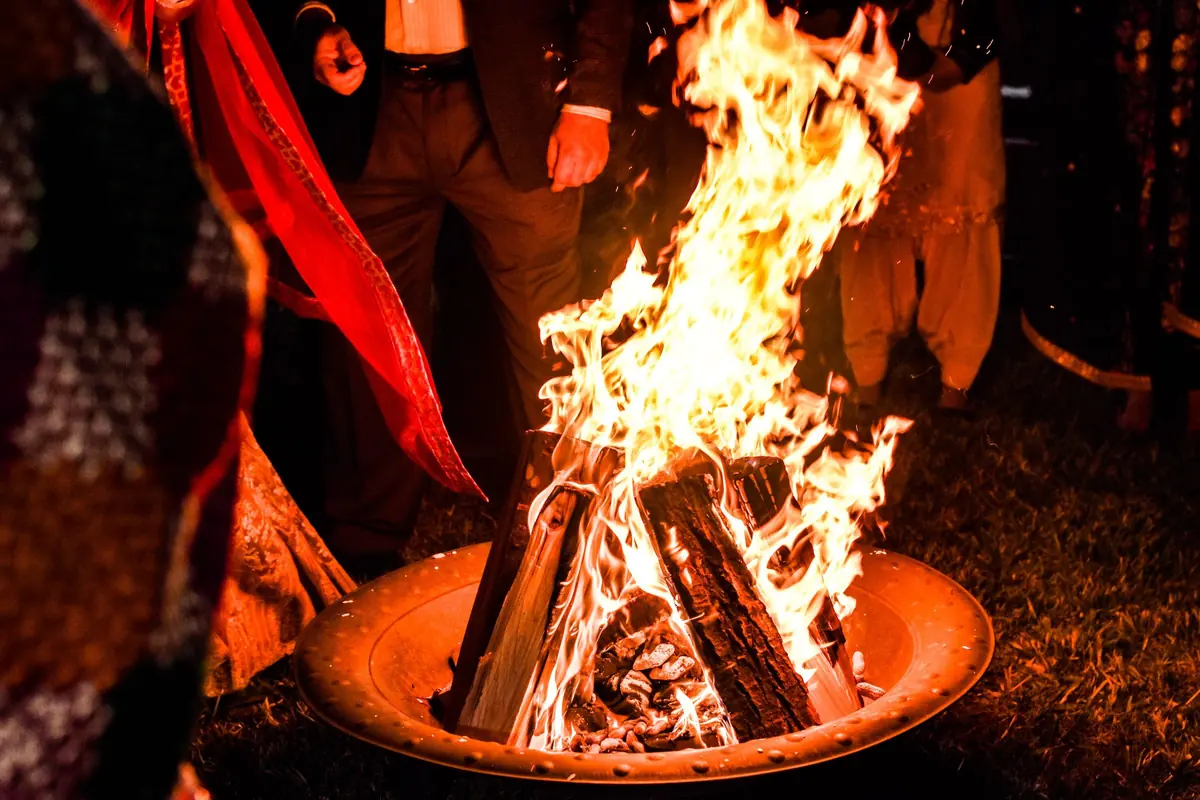
- Take off jackets, shawls and sweaters at the door.
- Do not put them in the wardrobe, and do not throw them in a laundry basket with clean-ish clothes; smoke spreads.
- Hang them on a balcony, a window grille or near an open window, ideally inside out.
- If it is raining or damp, hang them under a fan in a room you are not sleeping in.
How do you clear the smell the next morning?
Wash what you can; air and treat what you cannot.
Cotton kurtas, shirts and thermals can simply go in the wash. For a jacket, a lined coat or a woollen shawl you would rather not wash often, give it a few more hours of air inside out, then check the front, cuffs and collar. If smoke is still sitting in a jacket's lining, a few sprays of a pocket mist for smoke in a jacket lining from 15–20 cm will neutralise the smoky odour in the fabric rather than covering it; it dries in 15–30 seconds. Never spray leather, suede or anything labelled dry clean only, and patch-test silk and wool shawls on a hidden corner first. Pashmina and other delicate shawls should only be aired.
What about barbeque and tandoor smell?
The same steps, plus the grease. A barbeque or tandoor adds cooking fat to the smoke, so a shirt from a grill restaurant may need a wash rather than airing alone. Our guides to cooking smell in clothes and cigarette smoke in clothes cover those two.
How do you dress for a bonfire so less smoke sticks?
Wear a washable outer layer, and keep the good shawl at home.
- Pick a cotton or synthetic jacket you can wash, rather than a wool coat or a pashmina.
- Stand upwind; when the wind turns, step back for a minute.
- Keep your festive outfit under a layer you can take off before you go inside.
- For Diwali night, our firecracker smoke guide has the festival version.
Airing and a fabric mist deal with smoke smell, not soot marks or grease. A garment that smells heavily of smoke after a day of airing needs a wash or a cleaner. Never spray leather, suede or dry-clean-only clothes.
Sources
US Environmental Protection Agency Wood smoke and your health. EPA Burn Wise. epa.gov
Frequently Asked Questions
How long does bonfire smell last on clothes?
On cotton it fades within a day of airing or one wash. On wool, fleece and jacket linings it can last several days unless aired and treated.
Should I wash my jacket after a bonfire?
If its label allows, yes. If not, air it inside out for a few hours and treat the lining, cuffs and collar.
Does the smell spread to other clothes?
Yes. Keep smoky layers out of the wardrobe and laundry basket until they have aired.
Can I spray a pashmina shawl?
No. Air it only, or take it to a cleaner if the smell stays.
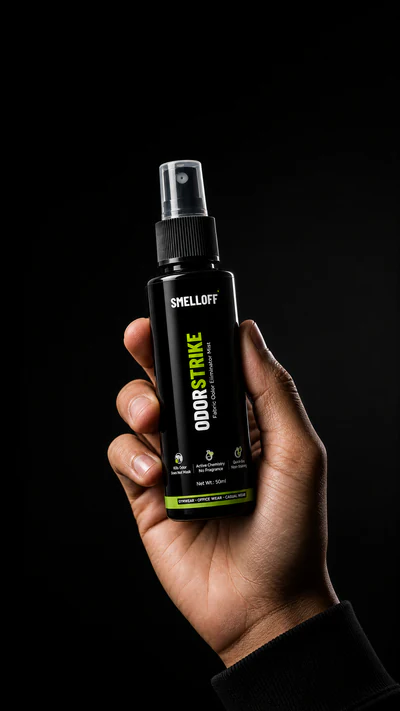
ODORSTRIKE — Fabric Odor Mist
50ml pocket spray for clothes. HPβCD traps odor molecules in the fabric and Zinc PCA neutralises them, instead of covering them with perfume. Dries in 15–30 seconds, up to 8 hours of odor protection on fabric under normal office/commute conditions. Fabric only, never skin.
Buy now View product details