
Heatwave Sweat Smell: Staying Fresh in North India
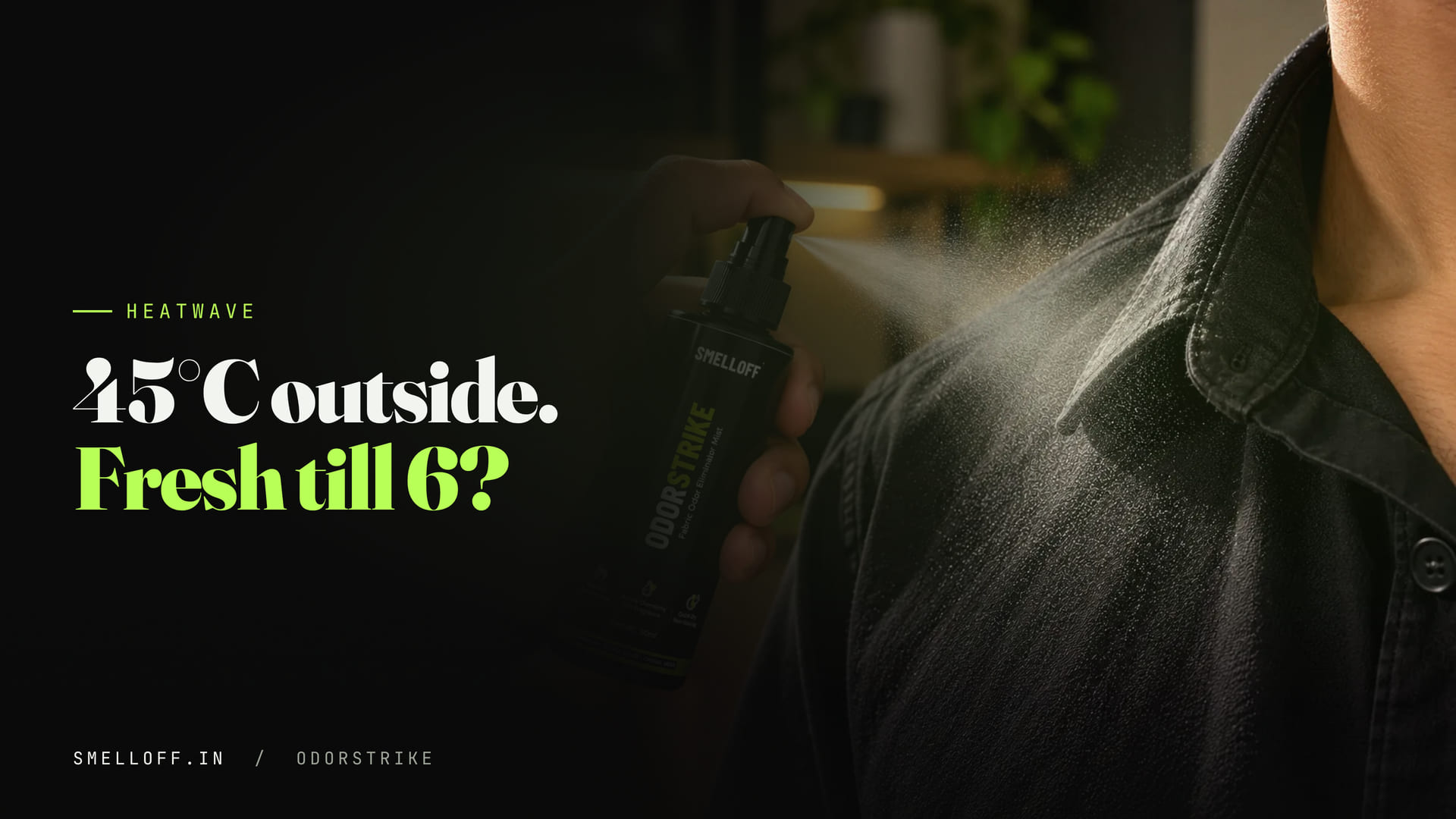
A north Indian summer is a different problem from a Mumbai monsoon. The air is dry, the loo blows hot, and the thermometer sits above 44°C for days. You sweat less visibly and more constantly. What that does to your shirt, and a routine that gets you through a heatwave day without the 4 pm smell.
How do you stay fresh in a north Indian heatwave?
Wear loose, light-coloured cotton over a thin cotton vest, carry a change of vest, and keep your shirt off your body on the commute where you can. On arrival, cool down, dry off and treat the shirt's collar, underarms and back with a fabric odor spray. Refresh again at lunch, and wash everything you sweated through.
In this guide6 sections
In May and June, much of north and central India lives above 40°C. In a heatwave, Delhi, Jaipur, Lucknow, Nagpur and Banda go past 45°C, and nights barely cool. The air is often dry, which is deceptive: sweat evaporates fast, so you do not feel soaked, but you are sweating all day and the shirt is collecting what is left behind.
What counts as a heatwave in India?
The India Meteorological Department declares one when the temperature reaches at least 40°C in the plains and is at least 4.5°C above normal, or when it reaches 45°C or more. A severe heatwave is a departure of more than 6.4°C. Those days arrive almost every year across the north and centre.
Why do clothes smell worse in a dry heat?
Because you sweat constantly, and what dries on the fabric is the part that smells. Sweat is mostly water. When it evaporates in dry air, salts, oils and the compounds skin bacteria feed on stay in the fabric. The American Society for Microbiology describes how those bacteria turn odorless sweat compounds into body odor. Twelve hours of that, layer on layer, is why a shirt that never felt wet can still smell by evening.
- AC to 45°C and back, many times a day, damps and dries the fabric repeatedly — the AC trap.
- Dust and the loo carry their own smell into the weave.
- Sunscreen and deodorant transfer onto collars and underarms and add to the build-up.
What should you wear in a heatwave?
Loose, light-coloured natural fibres, with a vest that takes the sweat.
- Cotton or linen over polyester. Natural fibres hold less body odor than polyester, as a Ghent University study in Applied and Environmental Microbiology found. The linen and kurta guide covers both.
- Loose cuts. Air between fabric and skin carries heat and moisture away.
- Light colours reflect sun. Save the black shirt for evening.
- A thin cotton vest takes most of the sweat so the shirt does not. Carry a spare.
- Cover your head and neck outdoors, as health advisories recommend; it also keeps sweat off your collar.
What is the heatwave day routine?
| When | What to do |
|---|---|
| Morning | Fresh vest; a shirt that is washed or aired and passes the sniff test |
| Commute | Over-layer or carry the shirt if you ride a two-wheeler; sit away from the sun side in a cab |
| Arrival | Cool down 3–5 minutes, dry off, change vest if damp |
| Arrival | Treat collar, underarms, back: 4–5 sprays from 15–20 cm, let dry |
| Lunch | Dry off; treat the same zones again after any time outdoors |
| Before evening plans | Change vest; treat the shirt once more |
| Home | Hang open, then wash — heatwave clothes rarely earn a second wear |
For the commute itself, the two-wheeler guide has the details. A pocket spray matters in a heatwave because the refresh has to happen where you are: ODORSTRIKE is a 50ml bottle that dries in 15–30 seconds and gives up to 8 hours of odor protection on fabric under normal office or commute conditions. A 45°C day is not normal conditions, which is why the routine treats the shirt more than once.
Does deodorant or perfume help in a heatwave?
Deodorant on skin, yes; perfume on clothes, not much. An antiperspirant reduces underarm sweat and deodorant handles skin odor. Neither deals with the odor already in the shirt. Perfume sprayed over sweat in heat often smells worse — the perfume and sweat guide explains why — and a deodorant spray on fabric can leave marks.
What about heat and your health?
Smelling fresh comes second to staying safe. In a heatwave, drink water through the day, avoid the sun between noon and 3 pm where you can, and watch for dizziness, headache, nausea or confusion — signs of heat illness that need you to cool down and seek medical help.
A fabric odor spray does not stop sweating or cool you down. It does not remove sweat marks or replace washing. Fabric only — never skin, hair or body.
Sources
India Meteorological Department. Heat wave criteria, in the daily heat bulletin. mausam.imd.gov.in
American Society for Microbiology. The Microbial Origins of Body Odor. ASM.org, 2021. asm.org
Callewaert, C. et al. Microbial odor profile of polyester and cotton clothes after a fitness session. Applied and Environmental Microbiology, 2014. pmc.ncbi.nlm.nih.gov
Frequently Asked Questions
Why do my clothes smell in dry heat even when I don't feel sweaty?
Sweat evaporates fast in dry air, so you do not feel wet, but its salts and oils stay in the fabric. Skin bacteria break those down into odor through the day.
What fabric is best for a north Indian summer?
Loose cotton or linen in light colours, over a thin cotton vest. Polyester holds more body odor.
How often should I refresh my shirt in a heatwave?
On arrival at work, after lunch or any time outdoors, and before evening plans. Treat the collar, underarms and back from 15–20 cm and let it dry.
Can I rewear a shirt after a heatwave day?
Usually not. Shirts worn through a 45°C day collect a lot of sweat; wash them.
Does a fabric spray cool you down?
No. It deals with odor in the fabric. Stay hydrated and out of the midday sun.
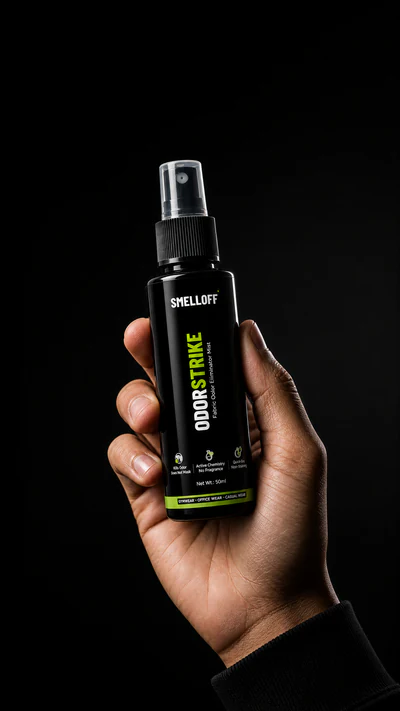
ODORSTRIKE — Fabric Odor Mist
50ml pocket spray for clothes. HPβCD traps odor molecules in the fabric and Zinc PCA neutralises them, instead of covering them with perfume. Dries in 15–30 seconds, up to 8 hours of odor protection on fabric under normal office/commute conditions. Fabric only, never skin.