
How to Not Smell Sweaty at a Job Interview
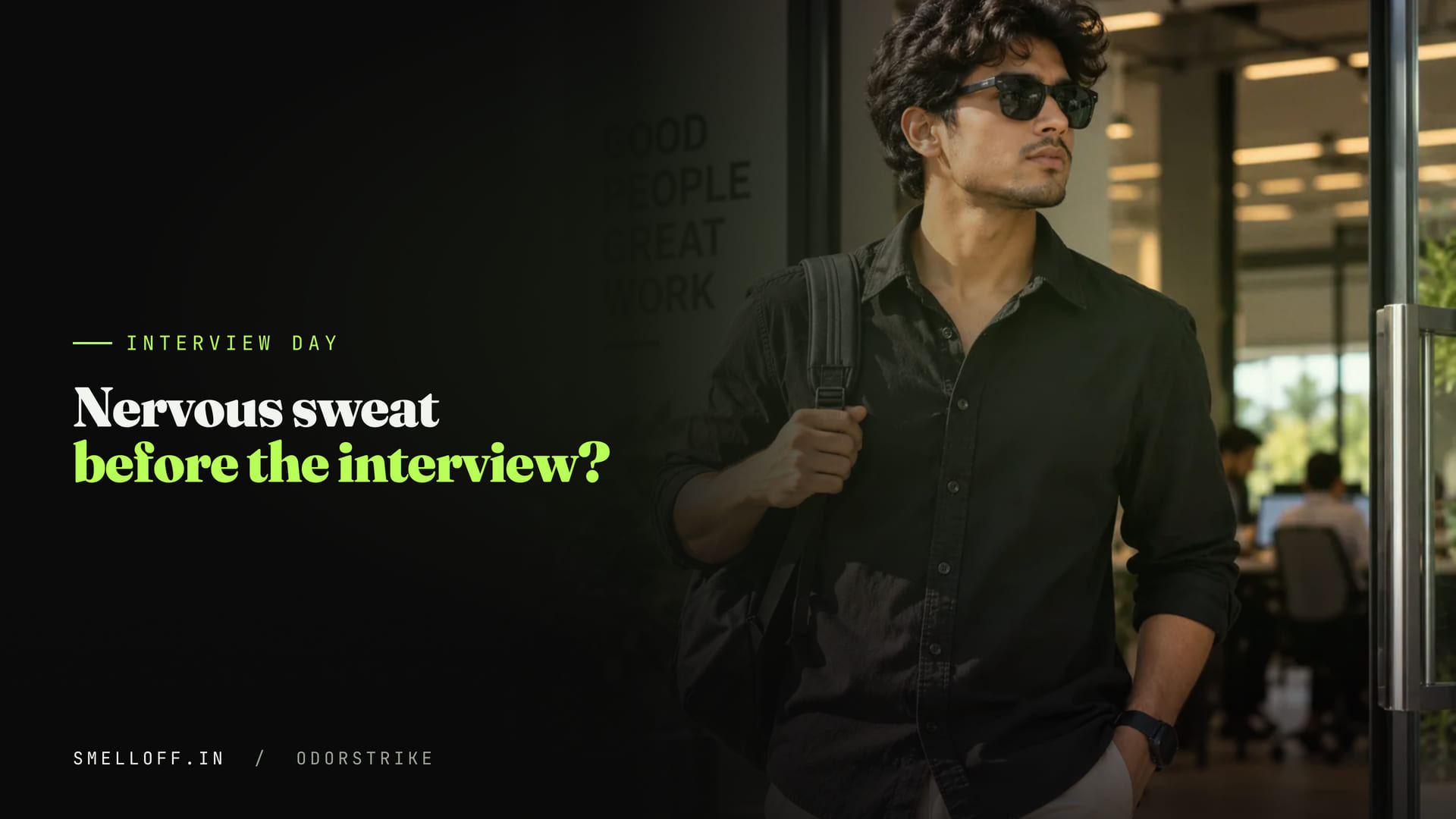
Interview nerves come with their own kind of sweat, and it smells stronger than the sweat you get from heat. A plan for the night before, the commute and the five minutes outside the door, written for Indian cities where you may arrive after a bus, an auto and a wait in a stuffy lobby.
How do you avoid smelling sweaty at a job interview?
Shower the morning of, use an antiperspirant the night before, wear a freshly washed cotton shirt over a cotton vest, and carry a spare vest. Arrive fifteen minutes early, cool down in shade or AC, then treat your shirt collar and underarm fabric with a fabric odor spray and let it dry before you walk in.
In this guide6 sections
You prepared the answers, ironed the shirt and left early. Then the bus was packed, the office was on the fourth floor of a building with a broken lift, and you are now sitting in a reception area feeling your shirt stick to your back. Nerves make it worse, and nerves are certain on interview day.
Smelling of sweat is not something an interviewer will mention. It is something they will notice. Here is how to remove it from the list of things that can go wrong.
Why does nervous sweat smell worse than normal sweat?
Because stress sweat comes from a different gland and carries more of what skin bacteria turn into odor. It is not in your head.
Your body has two main sweat glands. Eccrine glands, all over the body, produce watery sweat for cooling that has almost no smell. Apocrine glands, concentrated in the underarms, produce a thicker fluid rich in proteins and fats. Medical News Today notes that apocrine glands respond directly to norepinephrine, a stress hormone, so a tense moment switches them on even in a cool room. Skin bacteria break that thicker sweat down into the sharp, sulphurous notes people associate with fear.
Other people can pick it up, too. In a small 2012 study, participants who could smell stress sweat were more likely to read neutral faces as angry — an effect exercise sweat did not produce. You do not want that working against you across an interview table.
What should you do the night before?
Apply antiperspirant at night, choose the right shirt and pack a small kit. Most of the work happens before you leave home.
- Antiperspirant at bedtime, not in the morning. Antiperspirants work by plugging sweat ducts, which happens best on dry, cool skin while you sleep. Reapply lightly in the morning if you like. Deodorant (which only masks or reduces odor) is not the same thing; check the label.
- A freshly washed cotton or cotton-rich shirt. Not one worn once already. Polyester-heavy shirts hold body odor more than cotton, so save them for another day.
- A plain cotton vest underneath. It absorbs sweat before it reaches the shirt and hides damp patches.
- A light colour or a small check. Mid-grey and light blue show sweat patches the most; white, navy and patterns hide them best.
- Pack: a handkerchief, a spare vest in a zip pouch, a small water bottle and a pocket fabric odor spray.
How do you handle the commute?
Travel cool and keep the interview shirt as dry as possible until you get there. In Indian cities the commute does more damage than the interview.
If you can, take the AC option for this one trip — the cab or the AC bus instead of the auto. If you are on a two-wheeler, wear a light jacket or an old shirt over the interview shirt and take it off on arrival; our two-wheeler commute guide covers that routine. Eat a light breakfast; heavy, spicy meals raise body heat for a while afterward. And leave early enough that you are not rushing up stairs at the last minute.
What should you do in the five minutes before you walk in?
Cool down first, change the vest if it is damp, then treat the shirt and let it dry. Arrive fifteen minutes early so these five minutes exist.
- Cool down. Stand in AC or shade for a few minutes. Hold a cold water bottle against your wrists. Slow your breathing; it calms the stress response that drives the apocrine glands.
- Dry off. In the washroom, dab your face, neck and underarms with a handkerchief or tissue. Change into the spare vest if the first one is damp.
- Treat the shirt, not your skin. Take the shirt off or hold the fabric away from your body, and mist the inside of the collar and the underarm fabric with a fabric odor spray from 15–20 cm, 2–3 sprays per zone. ODORSTRIKE is made for this: HPβCD traps odor molecules in the fabric and Zinc PCA neutralises them, with only a light fabric scent that fades.
- Let it dry. 15–30 seconds, or a little longer in a humid washroom. Then button up.
Do not spray perfume or body deodorant over a sweaty shirt right before an interview. Perfume mixed with stress sweat gives a stronger, stranger smell than either alone, and it is the one smell an interviewer is sure to notice. Our guide on perfume and sweat explains why.
What about long interview days and group discussions?
Repeat the reset at every break. Campus placements, assessment centres and walk-in drives in India can run from morning to evening, with a written test, a group discussion and two or three rounds.
Use each break for the same routine: cool down, dry off, treat the collar and underarm fabric, let it dry. A 50ml pocket bottle has about 250 sprays, so it lasts through many such days. Keep your blazer off between rounds so the shirt can breathe, and put it back on just before you go in.
What if you sweat heavily all the time?
Talk to a doctor; heavy sweating has treatments. If you regularly sweat through shirts in cool rooms, that may be hyperhidrosis, a common medical condition. A dermatologist can suggest clinical-strength antiperspirants and other options. A fabric spray manages smell in clothes; it does not reduce sweating.
A fabric odor spray is for clothes only, never skin. It does not stop sweat, does not remove sweat stains and does not replace a washed shirt. It is a reset for a clean shirt that picked up smell on the way.
Sources
Medical News Today. Stress sweat: Why it smells worse and how to manage it. medicalnewstoday.com
American Society for Microbiology. The Microbial Origins of Body Odor. ASM.org, 2021. asm.org
Callewaert, C. et al. Microbial odor profile of polyester and cotton clothes after a fitness session. Applied and Environmental Microbiology, 2014. pmc.ncbi.nlm.nih.gov
Frequently Asked Questions
Why do I sweat so much in interviews?
Stress releases norepinephrine, which switches on the apocrine sweat glands in your underarms even in a cool room. That sweat is thicker than heat sweat, and skin bacteria break it down into stronger-smelling compounds.
Should I use deodorant or antiperspirant before an interview?
Antiperspirant reduces how much you sweat and works best applied at night on dry skin. Deodorant only reduces or masks odor. For an interview, use antiperspirant the night before and wear a fresh cotton shirt over a vest.
What colour shirt hides sweat at an interview?
White, navy and small patterns hide sweat patches best. Light grey, light blue and mid-tones show them the most.
Can I spray a fabric spray on my shirt while wearing it?
Hold the fabric away from your body or take the shirt off, then spray the inside of the collar and underarm fabric from 15–20 cm and let it dry. ODORSTRIKE is fabric only, never skin.
How early should I reach an interview to freshen up?
About fifteen minutes. That gives you time to cool down, dry off, change a damp vest and treat your shirt before you are called in.
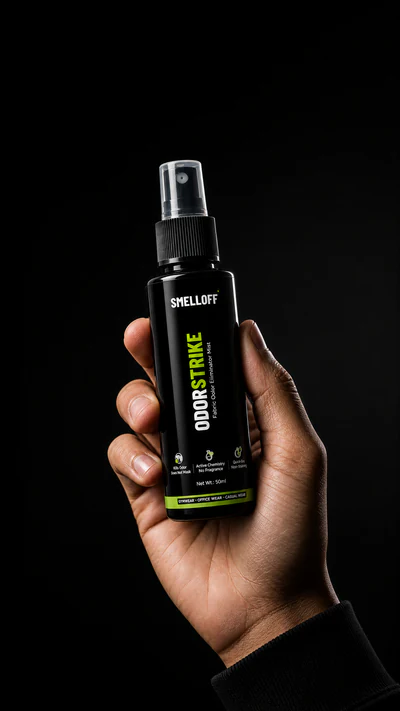
ODORSTRIKE — Fabric Odor Mist
50ml pocket spray for clothes. HPβCD traps odor molecules in the fabric and Zinc PCA neutralises them, instead of covering them with perfume. Dries in 15–30 seconds, up to 8 hours of odor protection on fabric under normal office/commute conditions. Fabric only, never skin.