
Odor on Clothes vs Odor in Clothes: What’s Actually Happening?
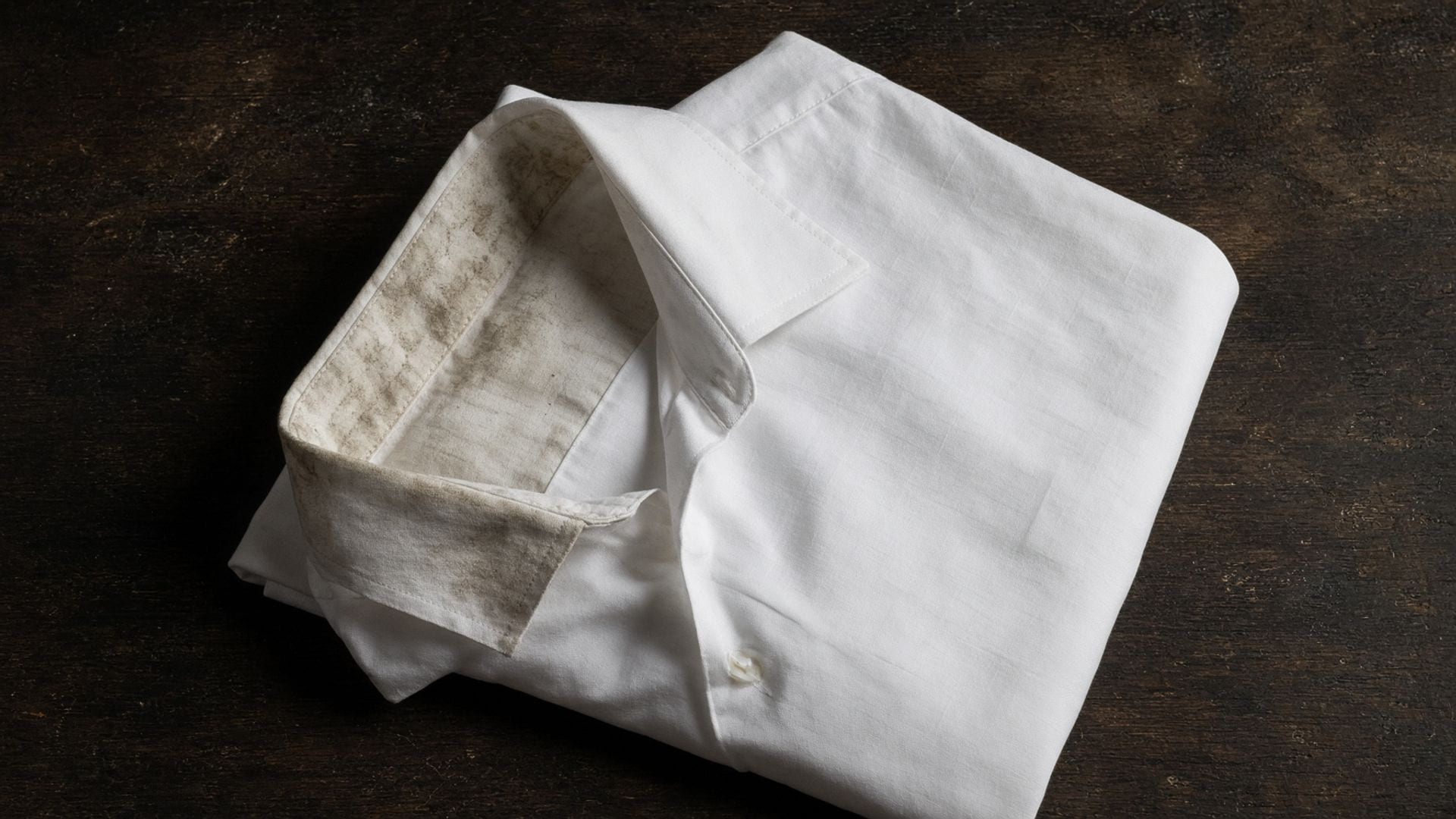
The difference matters because a smell that is merely near the surface behaves differently from odorants retained by the textile itself.
“Odor on clothes” and “odor in clothes” are useful ways to describe two stages of the same problem. Surface odor can disperse relatively quickly. Retained odorants can remain associated with textile fibres and become detectable again when the garment warms up, gets damp or is exposed to fresh sweat.
In this guide5 sections
A shirt can smell fine in one moment and smell bad again ten minutes later without the fabric magically creating a brand-new smell from nothing. What changes is how much of the odor is available to reach your nose. Textile fibres can interact with odorants, and that interaction changes with moisture, temperature and the history of the garment.
What does it mean for odor to be “in” a fabric?

It means odor-producing compounds are retained or associated with the fibre rather than existing only in the surrounding air. Different textile materials interact differently with volatile compounds, which is why the same sweat exposure can produce very different odor behaviour across fabrics.
Why does heat and moisture bring clothing odor back?
Warmth and moisture can change the way compounds move between the fibre and the surrounding air. A garment that seemed neutral when dry can become more noticeable after it is warmed on the body or rewetted with sweat. Research on textile sorption and release examines exactly this relationship between fabric and volatile odorants. See the primary research.
Is masking an odor the same as removing it?
No. Masking adds another volatile scent that competes with the unwanted smell. A neutralizing or binding approach targets the odor compounds themselves. That distinction matters when the goal is a shirt that smells neutral rather than a shirt that smells like two things at once.
Where do the odor compounds come from?
They can come from sweat and skin secretions, microbial activity, cooking smoke, cigarette smoke, damp storage, environmental exposure and previous wear. The textile then becomes the place where those compounds can remain, move or be released again.
What is the practical fix for a clean shirt with retained odor?
Start with the basics: make sure the garment is genuinely clean and fully dry. If it is dirty, wash it. If it is clean but carries residual odor, ventilate it and use a fabric-specific odor neutralizer on the affected zones. That is the gap between laundry and “just add perfume.”
Dirty → wash. Damp → dry. Clean + residual odor → neutralize. That is the clothing-care decision tree.
ODORSTRIKE sits in the third category. It is a fabric odor neutralizer for clothes, not skin deodorant, perfume or room freshener. The product is 50ml and ₹229, with exact formulation concentrations kept proprietary.
Frequently Asked Questions
What is the difference between odor on clothes and odor in clothes?
Surface odor is easier to disperse because compounds are near the textile surface. Retained odorants can remain associated with fibres and become noticeable again when the garment is warmed or rewetted.
Why does clothing smell return after it seemed fine?
Heat, sweat and moisture can increase the release of odorants that remain associated with the textile.
Is masking an odor the same as removing it?
No. Masking adds another smell. Odor control aims to reduce or bind the compounds responsible for the unwanted smell.
When should I wash instead of using an odor mist?
Wash when the garment is dirty, sweat-soaked, stained or has buildup that needs cleaning. A fabric odor mist is a between-wash tool for clean, dry clothing.
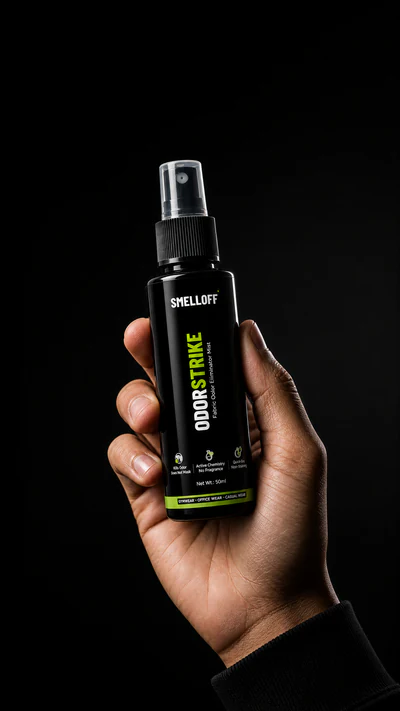
ODORSTRIKE — Fabric Odor Mist
50ml · ₹229 · For clothing fabric only
Buy now — ₹229 View product details