
Why Do Clothes Smell Bad Again After You Start Sweating?

The smell did not necessarily appear from nowhere. Sweat can re-wet odorants already sitting in the fibres, warming and releasing them into the air again.
Clothes can smell bad again after you start sweating because moisture and heat can re-mobilize odor compounds already retained in the fabric. Sweat also brings new skin-derived compounds and microbes into contact with the textile. Once the shirt warms up and becomes damp, previously trapped odorants become much easier to detect.
In this guide5 sections
A shirt can smell fine when you pull it from the wardrobe and then turn sour or musty after twenty minutes of wearing it. That does not automatically mean you suddenly became “dirty.” The fabric itself can be carrying an odor reservoir that becomes noticeable only after heat and moisture return.
Why does a shirt smell fine when dry but bad once I sweat?
Dry fabric can hide a problem because many odorants are less volatile at lower temperature and without fresh moisture moving through the fibre surface. Once the shirt becomes warm and damp, retained compounds can partition back toward the air around the fabric.
Is the new sweat itself the whole problem?
No. Fresh sweat is only part of the story. Body odor develops through interactions between sweat, skin microbes and the textile. The shirt can already contain residues from previous wears, laundering, skin oils and odorants that were not fully removed. The next bout of sweating can switch that reservoir back on.
Why does this happen so often with shirts and sportswear?
Clothing that sits close to the skin gets repeated exposure to sweat, sebum and skin microbes. Research has found that textile type changes odor behaviour: in a controlled study of 26 people after a fitness session, polyester shirts developed stronger and less pleasant odor than cotton shirts. See the peer-reviewed study.
What part of the shirt should you treat first?
Start with the zones that repeatedly get warm and damp: underarms, upper chest, collar and upper back. You do not need to soak the whole garment. A focused, light treatment is more practical and lets the fabric dry faster.
Can a fabric mist stop the cycle without replacing washing?
It can help between washes, but it is not a substitute for cleaning a dirty garment. A fabric odor mist is useful when the shirt is clean and dry but still has residual odor between wears. ODORSTRIKE is designed for clothing fabric only; it is not a skin deodorant and it does not replace washing.
Dirty shirt? Wash it. Damp shirt? Dry it. Clean shirt with residual odor? That is where a fabric odor neutralizer makes sense.
Research on odorants and textiles also shows that different fibres sorb and release body-odor compounds differently. That is why “just sweat less” is not a complete clothing-care strategy. The textile is part of the system. Textile sorption and release research is a useful primary source.
Frequently Asked Questions
Why does my shirt smell again after I sweat?
Heat and moisture can release odorants retained in the fibres while fresh sweat adds new material that microbes can transform into odor.
Does this mean my shirt is dirty?
Not necessarily. Residual odor can persist in a cleaned garment, especially when odorants have been retained by the fibre.
Which fabrics bring the problem back faster?
Polyester and other synthetic fibres can retain and release certain odorants differently from cotton. Wear and laundering history matter too.
Can I fix it without washing again?
For a clean, dry garment with residual odor, ventilation and a fabric-specific odor treatment can help. Heavily soiled clothing still needs washing.
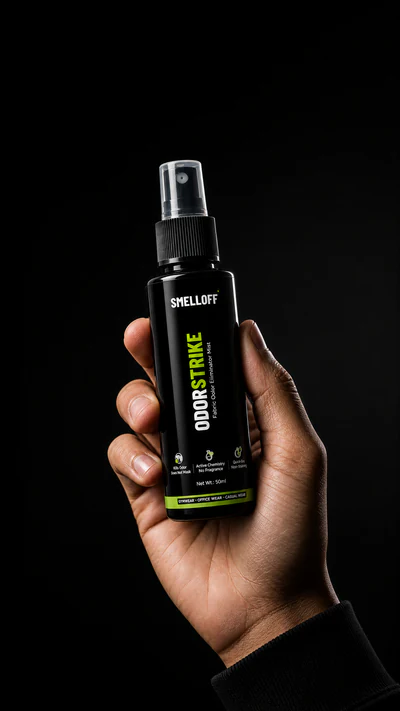
ODORSTRIKE — Fabric Odor Mist
50ml pocket spray for clothes. Fabric only. Not perfume. Not deodorant.